Middle East Conflict Impacts Oilfield Services Earnings
Oilfield services firms face lower earnings as the Iran war disrupts drilling. Producers are delaying projects despite rising oil prices and high repair costs.

Global oilfield services companies are preparing for a significant impact on their earnings as the conflict involving Iran disrupts energy infrastructure across the Middle East. Despite a 53% surge in Brent crude prices since the United States and Israel launched strikes on February 28, the typical boost in demand for rigs and crews has failed to materialize. Producers are holding back on new drilling until higher prices prove durable, while security risks and infrastructure damage have caused regional activity to plummet.
Igor Isaev, head of analytics at European broker Mind Money, highlighted the disconnect between rising commodity prices and actual service orders.
For oilfield services companies, the situation is quite ambiguous: if producers do not increase activity, the price jump alone will not lead to a rise in orders.
The offshore rig count in the Gulf, a key indicator of future output, has fallen approximately 39% to 72 rigs as of late March, down from 118 before the escalation. Navigation through the Strait of Hormuz, which carries roughly a fifth of global oil and natural gas supply, has also become increasingly difficult, complicating the movement of equipment and personnel. Lauren Mayhew, head of MENA Research at Welligence Energy Analytics, noted that a prolonged closure of the waterway would create severe logistical challenges.
A persistent closure of the Strait of Hormuz would severely impact crew mobilizations in the region as well as create logistical challenges for movement of equipment and higher insurance costs.
The financial impact on service providers has been immediate. SLB N.V. expects its first-quarter revenue to fall short of expectations, projecting an earnings hit of 6 to 9 cents per share following the suspension of operations in the region. Other major firms with high exposure to the Middle East include Halliburton Company and Baker Hughes Company. Smaller rivals are also feeling the pressure; Borr Drilling Limited has placed four rigs on standby across Saudi Arabia, the United Arab Emirates, and Qatar.
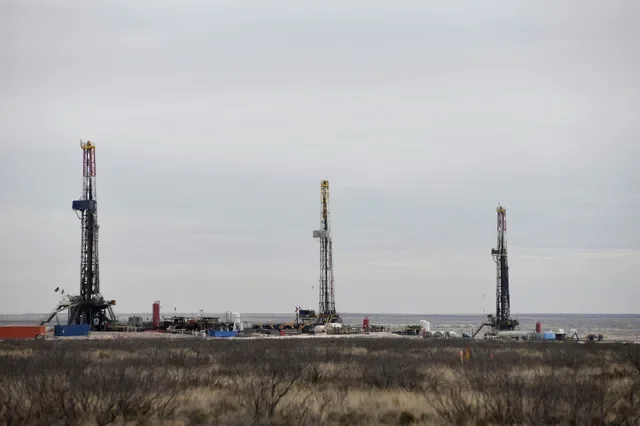
Richard Spears, vice president of oilfield consultancy Spears & Associates, suggested that revenue from Middle Eastern oilfield services could drop by 10% to 20% in the first quarter. While the conflict is currently weighing on activity, the eventual need for repairs to energy infrastructure—estimated by Rystad Energy to cost at least $25 billion—may support future demand. Karan Satwani, an analyst at Rystad Energy, observed that operators will likely prioritize maintenance over new developments.
Damage across Gulf energy infrastructure will generate meaningful demand for oilfield services ... this would result in operators prioritizing repair and maintenance of existing fields over contract awards for new development.
The CEO of QatarEnergy informed Reuters that attacks had disabled one-sixth of the nation's liquefied natural gas (LNG) export capacity, a loss valued at approximately $20 billion annually. Repairs are expected to take three to five years. Baker Hughes CEO Lorenzo Simonelli stated the company is prepared to assist QatarEnergy in assessing and repairing the damage.