Middle East Conflict Cuts Global Air Cargo Capacity
Middle East conflict has cut global air cargo capacity by 22 percent as major hubs face delays. Rates are rising for items from fresh produce to plane parts.

The conflict in the Middle East has left a wide range of shipments, from perishable goods to aerospace components, in a state of uncertainty as cargo capacity tightens and freight rates climb. Military actions involving the United States and Israel against Iran have led to the grounding of passenger and freighter flights across the region. This disruption has hit major global logistics hubs, including Doha in Qatar and Dubai in the United Arab Emirates, resulting in a 22% reduction in global air cargo capacity, according to data from Aevean.
"It is an absolute halt of the supply chain to the Middle East," said Abdol Moaberry, CEO of Florida-based GA Telesis.
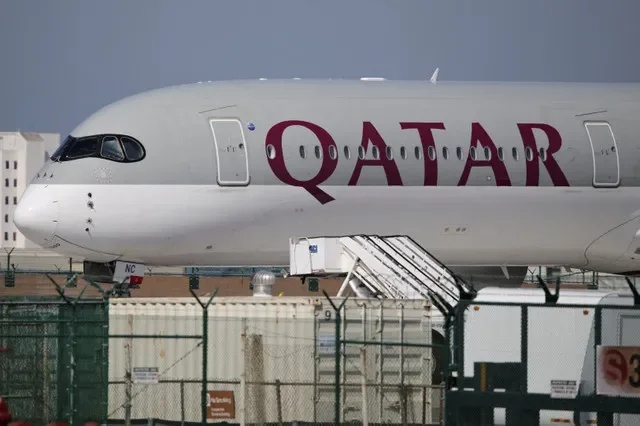
Air cargo accounts for roughly one-third of global trade by value, carrying everything from Apple Inc. products and pharmaceuticals to automotive parts. The current squeeze is already reflected in rising costs; the Freightos index shows that rates from Southeast Asia to Europe have jumped over 6% since Friday, while South Asia-to-U.S. rates have risen by 5%. Industry experts warn that spot rates on the Asia-Europe corridor could continue to climb if capacity constraints persist.
Middle Eastern carriers are central to global logistics, representing about 13% of total air cargo capacity. Qatar Airways currently ranks as the world's second-largest freight carrier, trailing only FedEx Corporation. Brian Bourke, chief commercial officer at SEKO Logistics, noted that while the impact is most immediate in Europe and the Asia-Pacific, companies in North America and Australia must also remain vigilant as the disruption ripples through global networks.
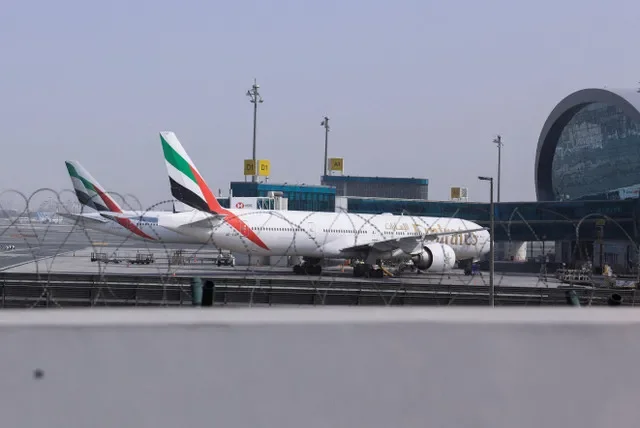
The shift in trade routes is stark. While capacity on the Asia-Middle East-Europe corridor has dropped by 39%, flows from China to Europe have increased by 26%. Chinese airlines may emerge as beneficiaries of the chaos, as they are able to fly through Russia airspace, saving time and fuel compared to Western carriers restricted by sanctions. Despite these shifts, the global logistics giant KUEHNE & NAGEL INTL-UNSP ADR has warned that backlogs of goods could develop within days in major exporting regions.
The current gridlock is particularly difficult to resolve because it affects both sea and air transport simultaneously. Air freight had previously served as a fallback for goods delayed by attacks on shipping in the Red Sea, but that escape route has now narrowed.
"Right now it is more fluid," said Peter Sand, chief analyst at Xeneta, adding that many companies will face increased working capital needs and cash flow strain.
The aviation industry is also struggling with its own supply chain issues. Shortages of aircraft parts are complicating efforts to maintain fleet readiness. Amyr Qureshi, senior vice president at Aventure Aviation, emphasized that carriers are urgently seeking components to ensure planes remain airworthy for when regional skies eventually reopen.
"If the part doesn't arrive on time the airplane sits in the hangar more," he said, noting the resulting domino effect on the industry.