Ghana Cocoa Buyers Owe Banks 750 Million Dollars in Debt
Licensed cocoa buyers in Ghana owe banks up to 750 million dollars as the industry faces liquidity challenges. The debt stems from poor harvests and delays.

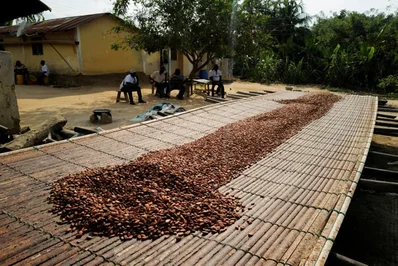
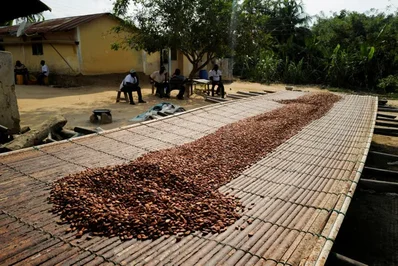
Licensed cocoa buyers in Ghana[Country:{ "assets":{ "country":"GH" } }] are grappling with a massive debt burden, owing local banks between $650 million and $750 million. This financial strain is creating significant liquidity risks for a banking sector already weakened by the nation's severe economic crisis. As the world's second-largest producer, the cocoa industry in the region has faced consecutive years of poor harvests caused by inclement weather and crop diseases. The situation is exacerbated by a global price slump driven by weak demand, leading to an oversupply in both the local market and neighboring Ivory Coast[Country:{ "assets":{ "country":"CI" } }], which together account for half of the world's cocoa supply. London cocoa futures recently fell to near a three-year low as a result of these market pressures. Samuel Adimado, president of the Licensed Cocoa Buyers Association of Ghana, attributed the rising debt to the industry regulator, Cocobod, prioritizing non-core expenditures such as road construction. Consequently, buyers have been forced to secure bank loans to pre-finance bean purchases. Adimado noted that interest on these loans continues to accumulate, further straining the financial position of buyers. > "In all, buyers owe banks around 7 billion to 8 billion cedis ($650 million to $750 million), and 2.2 billion to 2.5 billion cedis to farmers," Adimado told Reuters. "Interest keeps piling up." Although buyers have delivered approximately 580,000 metric tons of cocoa to Cocobod this season, they are still waiting for payment. An additional 70,000 metric tons remain in the fields. To mitigate the crisis, the government has reduced the fixed price paid for beans and proposed a new financing scheme to inject liquidity into the sector. The Ghana Association of Banks (GAB) confirmed the heavy exposure of lenders to these unpaid debts. John Awuah, CEO of GAB, noted that the situation has necessitated loan restructurings and could lead to further losses for financial institutions still recovering from the 2023 Domestic Debt Exchange Programme (DDEP). The DDEP previously converted short-term cocoa bills into long-term bonds with lower yields, significantly impacting bank capital. While Awuah described the system as resilient, he emphasized the need for careful management to ensure compliance with International Monetary Fund (IMF) support programs.