G7 Allies Seek Rare Earth Alternatives to US Trade Plan
Japan France and Canada are pursuing alternatives to a US-led rare earth trade bloc. These nations aim to use subsidies and quotas to diversify supply.

Several Group of Seven (G7) nations, including Japan, France, and Canada, are actively exploring alternatives to a proposed United States-led trade bloc for critical minerals. According to senior officials, these countries aim to secure essential supplies while diminishing the current market dominance held by China.
The proposed strategies include the implementation of import quotas on specific rare earths, direct subsidies for mining firms to diversify supply chains, and the establishment of a "buyers club." This latter initiative, spearheaded by Canada, seeks to build a reliable supply network for critical minerals outside of Chinese control.
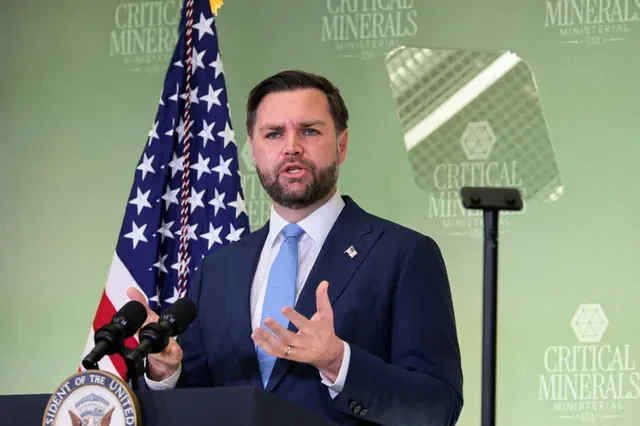
This shift comes shortly after U.S. Vice President JD Vance introduced plans in February to organize allies into a preferential trade bloc. However, the emergence of alternative plans suggests a growing preference among middle powers to collaborate independently, particularly as shifting American policies create uncertainty among traditional allies.
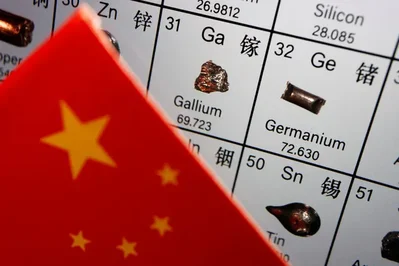
Hiroyuki Hatada, Director of the Americas Division at Japan's Ministry of Economy, Trade and Industry, noted that one path to diversification involves subsidizing projects within the Western Hemisphere to ensure they remain commercially competitive. Rare earths are vital components in high-tech industries, including electric vehicles and advanced weaponry. China currently manages more than 90% of the global supply and has previously used export controls as a retaliatory measure.
"They might not be the cheapest, but now that the industry understands the balance of risk and price, it is not a bad idea to use those projects," Hatada explained.
Japan has already directed its manufacturing sectors to pursue commercial agreements with rare earth projects funded alongside partners such as Australia and France. This includes monitoring developments with major producers like LYNAS RARE EARTHS LTD as part of a broader effort to stabilize the market.
Benjamin Gallezot, France’s interministerial delegate for strategic minerals, indicated that while the U.S. proposal is one option, a broader "G7 plus" approach is necessary. France has suggested a quota system where companies are restricted in the volume of metals they can import from single sources, alongside mandatory diversification requirements for specific industrial sectors.
"There will not be a general policy, that is our view. Second, it has to be built and discussed between a large number of countries, not only the G7, but G7 plus," Gallezot told Reuters.
Canada continues to aggressively pursue its own mineral security agenda, having recently signed 30 new agreements with 12 different nations. These deals represent a proposed C$12.6 billion ($9.22 billion) in mining and technology investments. Australia recently confirmed it would join Canada’s G7 critical minerals production alliance to further bolster these efforts.
"Canada believes that the best way to address the issue of concentrated supply of critical minerals is through a production alliance or a buyers club," Energy and Mining Minister Tim Hodgson told Reuters.