ECB policymakers signal cautious approach to rate hikes
ECB officials said on Tuesday they should not rush to change rates despite energy spikes from the Iran war. They will reassess policy at the March 19 meeting.

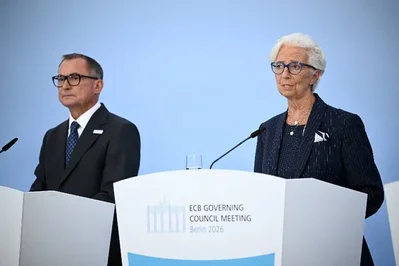
Policymakers from the European Central Bank (ECB) indicated on Tuesday that while the conflict in Iran and escalating energy prices could significantly impact the European economy, the central bank should remain on its current course for the time being. Markets have recently adjusted their expectations for interest rate hikes as surging energy costs threaten to fuel persistent inflation across the eurozone. The head of the central bank of Austria, Martin Kocher, warned against making impulsive policy shifts in response to the geopolitical situation. He noted that the primary objective remains managing interest rates to prevent inflation from becoming structural. > It is also crucial not to act hastily but rather to think carefully and consider the scenario thoroughly, while at the same time waiting to see how the situation develops. Kocher further remarked that those who act with undue haste often make poor decisions. While financial markets had fully priced in a rate hike by mid-year as recently as Monday, the probability has since dropped to approximately 50%. This volatility contrasts sharply with the outlook from two weeks ago, when investors expected stable rates or even potential cuts due to low inflation. Gediminas Simkus, the central bank chief of Lithuania, suggested that the ECB should avoid reassessing its stance with every market fluctuation. He emphasized the need for stability ahead of the bank's next meeting on March 19, particularly after crude oil prices spiked near $120 per barrel before retreating. > If you start thinking about monetary policy in the morning, you may end up with very different thinking in the evening. Simkus added that while the implications of the situation in Iran will be discussed at the upcoming meeting, the current policy path remains appropriate. Similarly, Madis Muller, the central bank governor of Estonia, advocated for a measured response. He stated that the ECB must determine whether the energy price shock is a temporary phenomenon or a long-term shift. > Even if we shouldnt rush into decisions, the probability of the next change in the policy rates now being more towards an increase, rather than the opposite, that probably has gone up in the last couple of weeks. Muller concluded that the bank should monitor whether the current rise in energy costs proves transitory before committing to a change in interest rate policy.