Dollar records monthly gain as China slows yuan rally
The dollar is set for its first monthly gain since October as geopolitical tensions rise. China moved to slow the yuan rally by adjusting reserve rules.

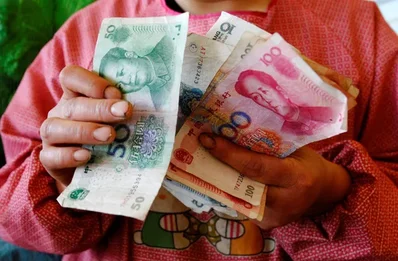
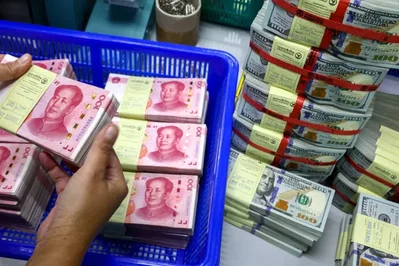
The United States dollar is positioned to record its first monthly gain since October, bolstered by rising geopolitical tensions and a shift in market expectations regarding interest rate trajectories. While the greenback has climbed approximately 0.6% against a basket of major currencies this February, investors remain on edge due to a combination of policy uncertainty and global instability. In China, the central bank moved to restrain a significant rally in the national currency. The People’s Bank of China adjusted foreign exchange risk reserves for forward contracts and set a lower-than-expected midpoint fix, resulting in the onshore yuan falling 0.2% to 6.8553 per dollar. Despite this recent cooling, the yuan has appreciated by roughly 2% since the start of the year. The Australia dollar, tracked via AUD/USD, continued its upward trend, rising 0.12% to $0.7115. This marks a fourth consecutive monthly gain for the currency, which has appreciated 6% this year amid a strengthening economy and expectations that the central bank may pivot toward higher interest rates. Geopolitical developments have further influenced market sentiment. Pakistan conducted airstrikes against Taliban targets in Afghanistan, an escalation described by officials as open warfare. Simultaneously, Oman acted as a mediator in nuclear discussions between the U.S. and Iran, reporting some progress but no definitive breakthrough to prevent potential military strikes. City Index market strategist Fiona Cincotta observed that the dollar appears to be in a transitional phase. > "It feels like its waiting for its next real catalyst." > "Youve got headwinds - concerns about policy uncertainty, tariffs and the lack of clarity there." > "Tailwinds - youve got the prospect of the Fed just keeping interest rates on hold for longer; youve got that slight safe-haven demand from geopolitical concerns." In Japan, the USD/JPY pair rose as the yen weakened by nearly 0.9% throughout the month, trading at 156.17. Although Bank of Japan Governor Kazuo Ueda has hinted at potential rate increases, domestic political challenges continue to complicate the monetary outlook. European currencies faced downward pressure, with the United Kingdom seeing GBP/USD trade at $1.348. The pound is set for a 1.4% monthly decline following a local election in Manchester that saw a landslide victory for the Green Party, a significant setback for the government. Meanwhile, the EUR/USD pair remained stable at approximately $1.18, though it is on track for a 0.4% loss for the month. Additional reporting was provided from Singapore.