Beijing Boosts Export Controls While US Eases Restrictions
Beijing is ramping up rare-earth export enforcement as compliance queries surge. Concurrently, the U.S. has eased some tech curbs before a key March summit.

Nearly a year after China expanded its rare-earth export controls, domestic manufacturers are grappling with regulatory uncertainty. Companies producing items ranging from medical equipment to motor components have flooded the commerce ministry with inquiries regarding whether their products require specialized licenses. This surge in domestic oversight comes as the United States appears to be moderating its own technology restrictions under the second term of President Donald Trump.
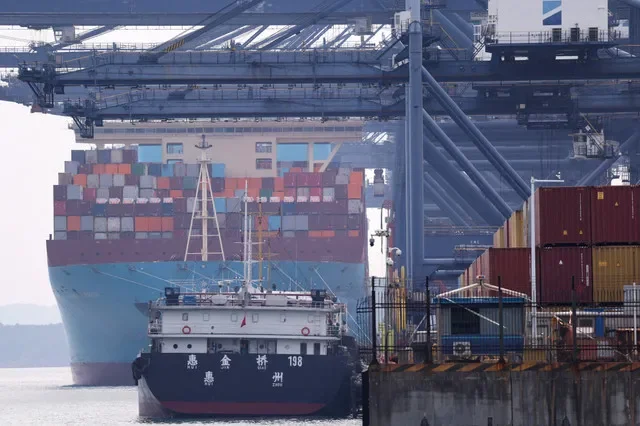
The shifting landscape is expected to be a primary focus when Trump and Chinese President Xi Jinping meet in Beijing this March. Analysts suggest that Beijing is rapidly formalizing an export-control apparatus to leverage its dominance in strategic sectors. Alfredo Montufar-Helu, a managing director at Ankura Consulting, noted the strategic nature of these moves.
"What we are seeing in China is ... the rapid construction of a comprehensive export-control apparatus designed to weaponize chokepoints across strategic and non-strategic sectors."
Data from the Chinese commerce ministry indicates a significant spike in compliance queries. Between 2019 and 2024, only 43 such inquiries were made public. In 2025 alone, that number rose to 135, with many exporters expressing frustration over shipment delays and increased regulatory burdens. To manage this workload, Beijing is significantly increasing its enforcement staff, with dozens of new civil service positions dedicated specifically to export control.
While China tightens its grip on the supply chain for materials used in electric vehicles and defense systems, the pace of American restrictions has slowed. Additions to the U.S. Entity List, which limits exports to specific foreign firms, dropped from a record 257 in 2024 to 131 in 2025. This moderation has faced criticism from some lawmakers, particularly regarding the approval of high-end semiconductor shipments by NVIDIA Corporation.
A spokesperson for the chipmaker defended the current approach to trade.
"America should always want its industry to compete for vetted and approved commercial businesses, and thereby protecting national security, creating American jobs, and keeping Americas lead in AI."
The U.S. Department of Defense recently highlighted the complexities of these lists when it briefly published, then retracted, a document that would have added Alibaba Group Holding Limited and Baidu, Inc. to a restricted military end-user list. Meanwhile, global competitors in the rare earth sector, such as LYNAS RARE EARTHS LTD, continue to monitor how Beijing’s licensing system affects the processing and downstream incorporation of refined oxides and metals.
Li Xing, a professor at the Guangdong Institute for International Strategies, observed that China's current strategy mirrors tactics previously used by Western nations.
"Chinas use of rare earths as leverage is completely learned from the West - especially the U.S."
As both nations prepare for high-level talks, the tension between maintaining global supply chains and securing national interests remains high. Nick Myers, chief executive of the startup Phoenix Tailings, characterized the current environment as more than just a logistical hurdle.
"This is not just a supply chain shortage. This is economic warfare."