One Question Sorts Every AI Company: How Fast Could You Replace It?
Tony P.IUX24 Research Team

Latest version only

TopicsMarket Analysis


Latest version only
半導體與硬體2026年9月23日
The fastest chips ever built spend much of their time waiting for data. That one fact turned memory from a commodity into an execution race between three companies.
半導體與硬體2026年9月23日
A 10% edge disappears into integration work. Buyers aren't buying a chip, they're buying a working system. That's why the best challengers ended up as parts of the platform they set out to replace.
半導體與硬體2026年9月23日
EUV lithography has no second supplier, not even a weaker one. ASML didn't beat its rivals. They read the same research and decided it wasn't worth it.
The only question that matters: how long the slot stays empty.
Every map of the AI industry gets drawn the same way: logos in boxes, arrows between them, and an argument about who is a monopoly.
Monopoly is the wrong question. Plenty of companies on that map have competitors and are still impossible to work around. Others look dominant and could be swapped out inside a quarter.
There's one question that sorts the whole industry correctly:
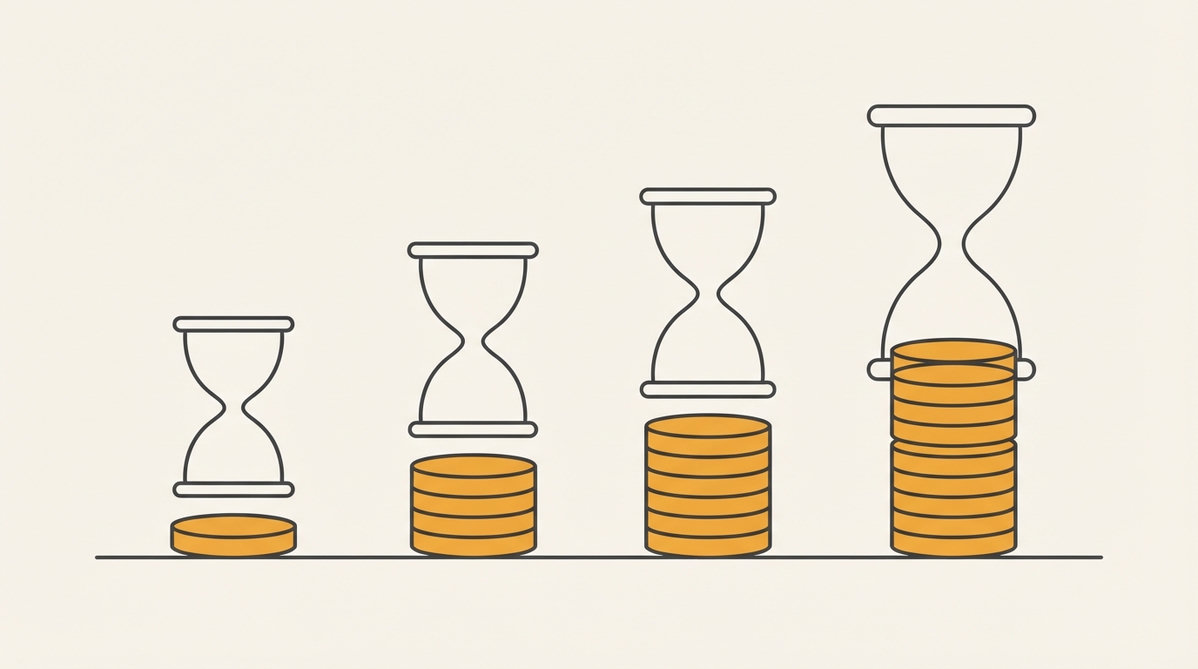
Not "could someone else do it." How long. The answer is the only ranking that matters, because profit collects exactly where that number is large.
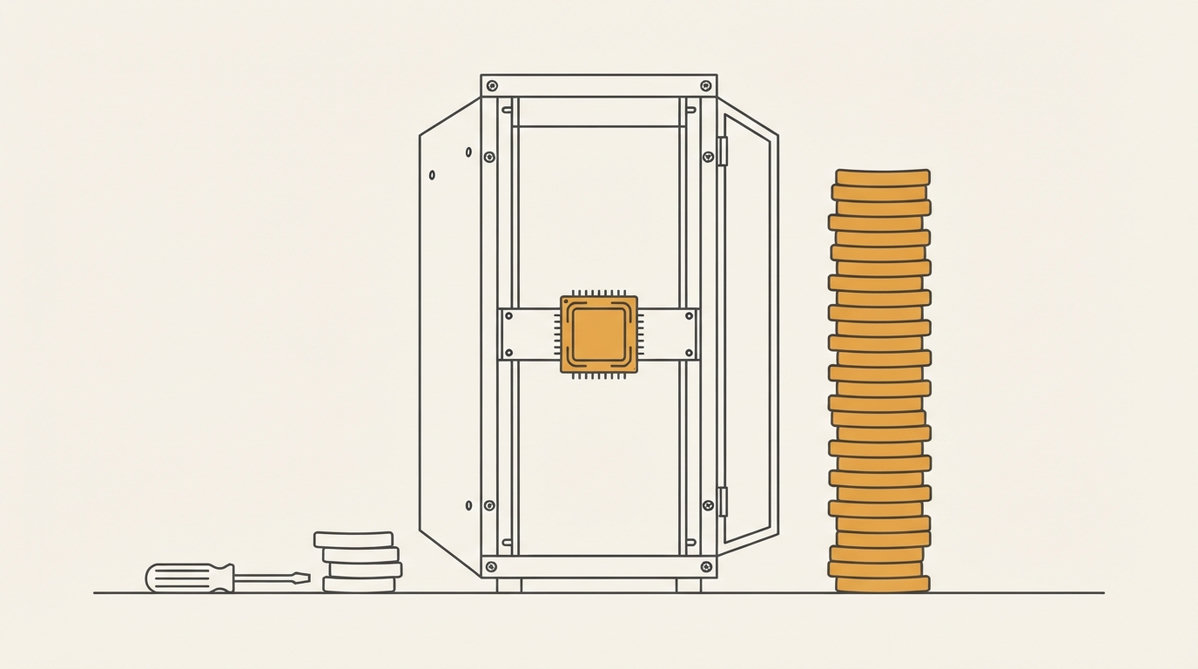
Rack assembly. Roughly forty percent of the world's AI racks are physically screwed together by one contract manufacturer, and if it stopped tomorrow two others would absorb the work almost immediately. You can see it in the economics: assembly runs single-digit margins while the silicon inside the same rack runs around seventy-five percent.
Same object. Same building. The difference isn't effort, it's scarcity.
Screwing the rack together earns a few coins. The chip inside it earns a tower.
Standard server integration, commodity components, most cabling. Real businesses, real revenue, no leverage. Anything that can be re-tendered in a month prices like it.
Server brands and most networking boxes. There are real switching costs here — software, support, certification — but they're measured in quarters, not years.
Conventional memory. Ordinary DRAM is interchangeable by design. If one qualified supplier stumbles, a customer substitutes another. That's precisely why it has spent decades as the most brutal commodity business in technology.
This is where it gets interesting, because almost everything in this band is invisible from the outside.
Advanced packaging capacity. For much of the AI build-out the limit on how many accelerators the world could produce was not fabrication — it was the packaging step that joins logic dies and memory towers. Buyers weren't competing for wafers; they were competing for line space. Unlike the machines that print circuitry, this isn't controlled by one company. Several are expanding. But building and qualifying a facility still takes years, so the shortage is real even though the monopoly isn't.
HBM qualification. Three companies make essentially all the memory towers that sit beside AI processors. That's not the barrier. The barrier is that each product must be co-designed and qualified with a specific accelerator and package. A product announcement is not a qualification, and a qualification is not mass-production revenue. The lead one company holds came from betting years early, not from a better datasheet.
Materials. Photoresist, mask blanks, silicon wafers, the insulating film inside package substrates. Individually these cost a rounding error compared to the finished part. Collectively, missing one of them stops a factory worth tens of billions. And each one is qualified against a specific process, which means switching supplier is a multi-year test programme, not a purchase order.
Design software. Two companies control roughly three-quarters of the tools every advanced chip is designed with, and that entire software market is less than 2% of the industry's revenue. Their advantage isn't only better code — the foundries' manufacturing rules are built into the tools, so by the time an engineer finishes a design, millions of possible manufacturing errors have already been checked. Switching platforms mid-project can cost months, which is why nobody does it.
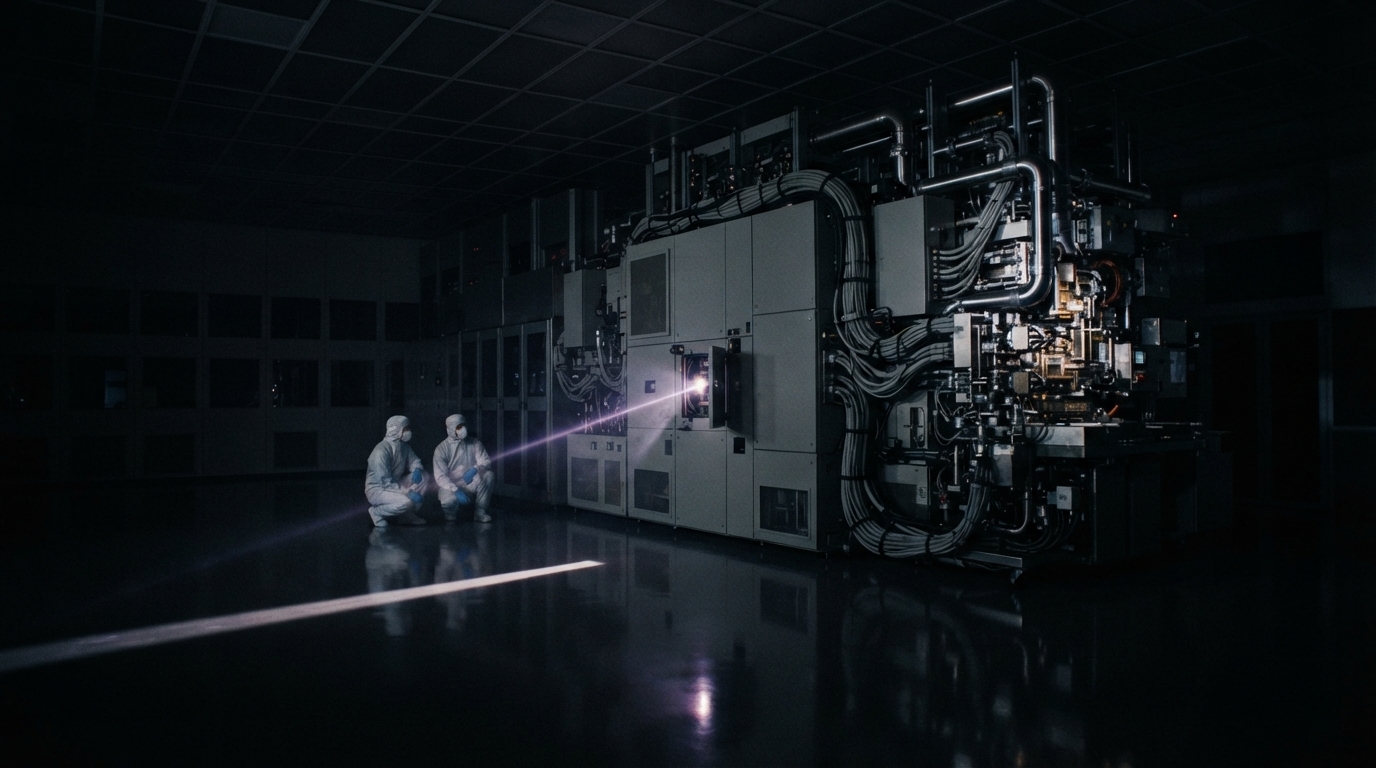
The EUV lithography machine. One company. A few hundred machines worldwide. No second commercial supplier — not a weaker one, none. And the reason isn't conquest: the two other lithography firms on Earth studied the problem and concluded the development cost couldn't be justified.
Leading-edge manufacturing at yield. Twenty-five years ago about twenty-five companies could manufacture at the leading edge. Today three can, and one of them holds most of the market. Its moat isn't a machine — competitors can buy similar equipment. It's making roughly a thousand process steps work together reliably, improving yield over years of accumulated experience, and being trusted with customers' most valuable designs.
The software habit of a million engineers. Twenty years of libraries, frameworks and tooling built on one platform. When a rival ships a chip with better specs — and it happens — the customer isn't comparing chips. They're comparing chips plus the cost of retraining their engineering organisation and rewriting code with an expensive training run on the line. That's why margins survive competition that looks, on paper, like a fair fight.
Grid interconnection. Not a company at all, and the hardest one to route around: a queue you can't buy your way to the front of, and a transformer order that now takes years. The only strategy is to stop needing the grid, which is exactly what buyers are doing.
The queue to the socket doesn't move. The only way out is to stop needing it.
One: price does not measure importance. The film between the wiring layers costs almost nothing and is nearly irreplaceable. The accelerator costs tens of thousands and could be designed by at least a few organisations. Cheap and irreplaceable beats expensive and reproducible, every time.
Two: profit lives where replacement is slow. Not where the work is hardest, not where the engineering is most impressive. Assembly is genuinely difficult and pays single digits. The film supplier is a food company and holds most of a market.
The longer the slot would stay empty, the taller the pile in front of it.
Three: replace-time is not a law of physics. It moves. One inference specialist demonstrated that the memory bottleneck everyone prices as permanent is actually a design choice — and was promptly bought by the platform it threatened. Packaging capacity is scarce right now because nobody built enough of it, and capacity is the one kind of scarcity that money reliably fixes.
So when you next see the industry map, don't read it left to right. Read it by the clock.
Ask each box: how many years? Then look at where the profit sits. You'll find it's the same list.
Comments