Dollar falls for seventh day on Middle East peace hopes
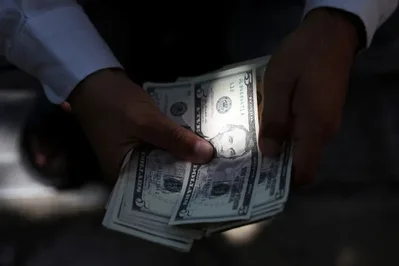
The US dollar fell for a seventh day as investors hoped for a Middle East breakthrough. Prospects for a deal between Washington and Tehran boosted sentiment.

The United States dollar trended lower on Tuesday, marking a potential seventh consecutive daily decline as investors weighed the possibility of a diplomatic breakthrough in the Middle East. While the region remains tense and energy shipping lanes face uncertainty, the greenback softened against most major peers during the Asian trading session as market participants positioned for a de-escalation between Washington and Iran.

The USD/JPY exchange rate fell 0.3% to 159.02, while the EUR/USD pair remained stable at $1.1768. The dollar index, measuring the currency against a basket of six rivals, sat at 98.31. This level is near its weakest point since early March, following the outbreak of conflict involving the U.S. and Israel against Iranian forces.
Negotiations between Washington and Tehran are reportedly ongoing. U.S. Vice President JD Vance indicated that the White House expects progress regarding the Strait of Hormuz, a vital artery for global energy through which 20% of shipments pass. Although President Donald Trump noted that the military has begun a blockade of Iranian ports, he also mentioned that Tehran has expressed interest in reaching an agreement.
The series of comments has brought some relief to the markets, as it has renewed the possibility of a diplomatic resolution.
Keiichi Iguchi, senior strategist at Resona Holdings, noted that while the dollar has softened, the yen remains vulnerable. Concerns persist that the trade balance for Japan could worsen if prices for Brent Crude Oil and West Texas Oil remain high.
In the currency markets of Australia and New Zealand, the AUD/USD traded near 71 cents, its highest in nearly a month, while the NZD/USD held at $0.5871.
Market expectations for an interest rate hike by the Bank of Japan have diminished as volatility continues to cloud the economic outlook. Interest rate swaps currently indicate a 32% probability of a rate increase this month, a sharp drop from the 57% chance estimated late last week.
We're very much of the view that if the BOJ decides to stand pat at the end of April, then the risks are that the dollar-yen exchange rate is going to punch up through 160.
Ray Attrill, head of forex strategy at National Australia Bank, suggested that 160 yen per dollar is viewed by many as a critical threshold that could trigger government intervention.