
Tencent to Increase AI Spending Following Strong Results
Tencent plans higher AI investment in 2026 after chip curbs hit 2025 spending. The firm reported a 13% revenue rise to 194.4 billion yuan for the fourth quarter.

TENCENT HOLDINGS LTD has announced plans to ramp up its investment in artificial intelligence through 2026, acknowledging that previous capital expenditure targets were hampered by international chip export restrictions. The company reported that its total capex for 2025 reached approximately 79 billion yuan ($11.49 billion), an increase from 77 billion yuan in 2024 but below internal projections due to difficulties in sourcing advanced AI semiconductors.
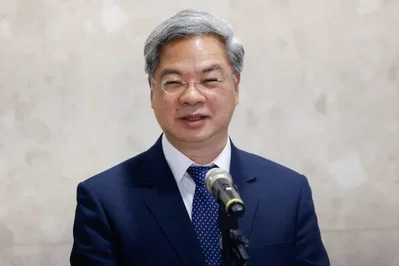
Speaking to reporters in China and Singapore following the release of fourth-quarter financial results, President Martin Lau stated that the firm aims to boost spending to accelerate the development of proprietary models. This strategic push is intended to maintain competitiveness against industry rivals such as Alibaba Group Holding Limited and ByteDance in the rapidly evolving AI landscape.
To strengthen its technical capabilities, Tencent has focused on acquiring specialized talent, including the recent hiring of former OpenAI researcher Yao Shunyu to lead the development of its Hunyuan large language model. The company also committed 1 billion yuan to marketing its Yuanbao AI chatbot during the Lunar New Year holiday to secure a larger share of the crowded domestic market.
Earlier this month, the tech giant introduced its OpenClaw AI product suite, which includes QClaw for individual users, Lighthouse for developers, and WorkBuddy for enterprises. Executives also revealed that a new AI agent for the WeChat messaging and payments platform is currently under development, alongside the upcoming release of Hunyuan 3.0, an upgraded version of its proprietary model.
The company's financial performance remained robust, with total revenue for the quarter ending in December reaching 194.4 billion yuan, a 13% increase year-on-year. This result slightly exceeded the 193.5 billion yuan average estimate from analysts polled by LSEG. Growth was primarily driven by the gaming sector, where international revenue surged by more than 30% and domestic revenue increased by 15%. Online advertising revenue also climbed 17% to 41.1 billion yuan, a performance attributed to AI-enhanced targeting. Quarterly net profit stood at 58.26 billion yuan, surpassing the average market estimate of 57.75 billion yuan as reported by Reuters.