
Oil prices decline as U.S. crude stocks rise by 16 million
Oil prices fell as U.S. crude stocks rose by 16 million barrels. This build outweighed supply risks from Middle East tensions and OPEC+ output discussions.

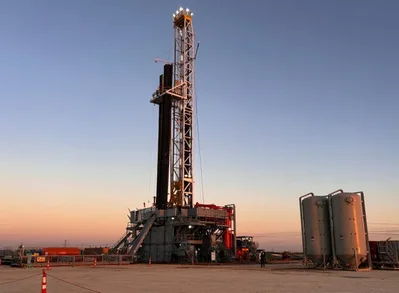
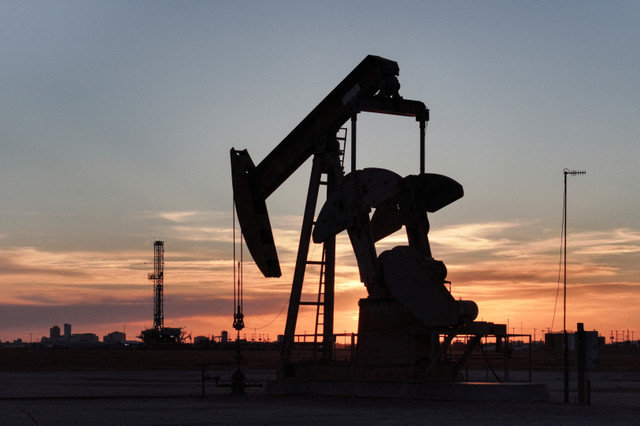
Oil prices shifted into negative territory on Wednesday as a massive surge in crude inventories in the United States[Country:{\"assets\":{\"country\":\"US\"}}] outweighed concerns regarding potential supply disruptions from the Middle East. Brent futures fell 12 cents to $70.65 a barrel, while West Texas Intermediate (WTI) futures dropped 26 cents to $65.37. The Energy Information Administration (EIA) reported that domestic crude stocks rose by 16 million barrels last week, a figure that dwarfed the 1.5-million-barrel increase projected by analysts. This build-up occurred alongside a decline in refinery utilization and an uptick in imports.
Despite the bearish inventory data, the market remains supported by escalating tensions between the U.S. and Iran[Country:{\"assets\":{\"country\":\"IR\"}}]. Market analysts suggest that geopolitical risks are currently acting as a primary driver for price floors. Giovanni Staunovo, a commodity analyst at UBS Group AG[Symbol:{\"assets\":{\"symbol\":\"UBS\"}}], commented on the situation:
A bearish (EIA) report with a large crude build... the prices impact was however limited, as the oil market remains more influenced by other factors at present, such as geopolitical tensions in the Middle East.
In response to the regional instability, the Saudi Arabian Oil Company[Symbol:{\"assets\":{\"symbol\":\"2222.SR\"}}] has reportedly activated a contingency plan to surge production and exports should a conflict disrupt global oil flows. This comes as the U.S. continues to position military forces in the region to pressure Tehran over its nuclear program. While military posturing continues, diplomatic channels remain open, with high-level talks scheduled in Geneva between U.S. envoys and Iranian representatives.
On the supply management front, OPEC+ is considering a production hike of 137,000 barrels per day starting in April. This move would end a three-month pause in output increases as the group prepares for the peak summer demand season. Key participants in the upcoming March 1 meeting include Saudi Arabia[Country:{\"assets\":{\"country\":\"SA\"}}], Russia[Country:{\"assets\":{\"country\":\"RU\"}}], the United Arab Emirates[Country:{\"assets\":{\"country\":\"AE\"}}], Kazakhstan[Country:{\"assets\":{\"country\":\"KZ\"}}], Kuwait[Country:{\"assets\":{\"country\":\"KW\"}}], Iraq[Country:{\"assets\":{\"country\":\"IQ\"}}], Algeria[Country:{\"assets\":{\"country\":\"DZ\"}}], and Oman[Country:{\"assets\":{\"country\":\"OM\"}}].
Adding to the market's complexity is the uncertainty surrounding U.S. trade policy. A 10% global tariff recently came into effect, with indications from the administration that the rate could rise to 15% or higher for specific trading partners. These trade measures have introduced a new layer of volatility for investors already navigating a complex landscape of supply data and geopolitical risk.