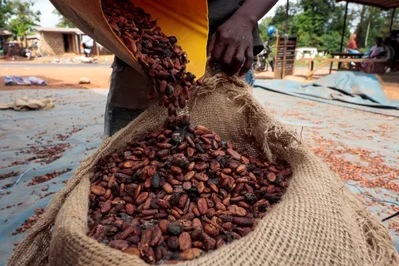

Ivory Coast and Ghana cut cocoa prices amid sales crisis
Top cocoa producers are cutting farmer prices to clear surplus stocks as demand falls. This follows a sharp drop in market rates below fixed levels.

Ivory Coast and Ghana are currently facing a significant cocoa sales crisis, driven by a combination of high global harvests, falling prices, and reduced demand from international chocolate manufacturers. As the producers of half the world's cocoa, these two nations have struggled to pay farmers and move beans through the supply chain this year. The two West African nations operate under a regulated system where government-appointed bodies sell about 80% of the cocoa crop to global traders a year in advance. Based on these forward sales, a fixed price is established for farmers at the start of the season in October. While this system is designed to provide stability, the recent collapse in world cocoa prices has disrupted the mechanism. Last October, the price for the main crop was set at approximately $5,000 per metric ton in one region and $5,300 in the other. Since then, world cocoa futures have plunged to around $3,100 per ton. For global traders and processors, including entities such as FTN COCOA PROCESSORS PLC, the price drop created immediate financial risks. Buying beans at the high fixed farmer price and selling them at current futures market rates would result in significant losses. Consequently, many traders have halted purchases, leading to a massive accumulation of unsold stocks. To address the liquidity crisis, the Ivorian government recently initiated a program to buy 100,000 tons of unsold cocoa at a cost of $500 million. In a similar move, the Ghanaian regulator reduced the fixed farmer price by nearly a third to approximately $3,580 per ton to better align with market realities. The price volatility is partly attributed to a shift in consumer behavior and manufacturing strategies. High cocoa costs previously prompted chocolate makers to reduce product sizes or use alternatives like cocoa butter substitutes. At the same time, favorable weather has resulted in a global surplus estimated between 300,000 and 400,000 tons. Unlike international trading firms, the local regulators in West Africa often lack the financial resources or infrastructure to store such large quantities of beans. The economic stakes are high, as cocoa accounts for nearly 40% of export revenue for the Ivorian economy and 15% for Ghana. The crisis is compounded by broader economic challenges, particularly in the Ghanaian market, which is recovering from a major debt crisis. Nearly 2 million farmers and their families depend on cocoa for their livelihoods, and the current inability to secure payments threatens the stability of these rural communities.