Iran Closes Strait of Hormuz Disrupting Global Oil Trade
Iran has closed the Strait of Hormuz following military strikes, causing traffic to drop by 97 percent. The U.S. is now considering naval escorts for tankers.

Following through on a long-standing strategic threat, Iran has effectively closed the Strait of Hormuz, a critical maritime artery that facilitates the transport of approximately 20% of the world's oil and liquefied natural gas (LNG). This move comes as a direct retaliation for military strikes conducted by the United States and Israel. Since the onset of the conflict on February 28, shipping traffic through the strait has plummeted by 97%, according to data provided by the United Nations.
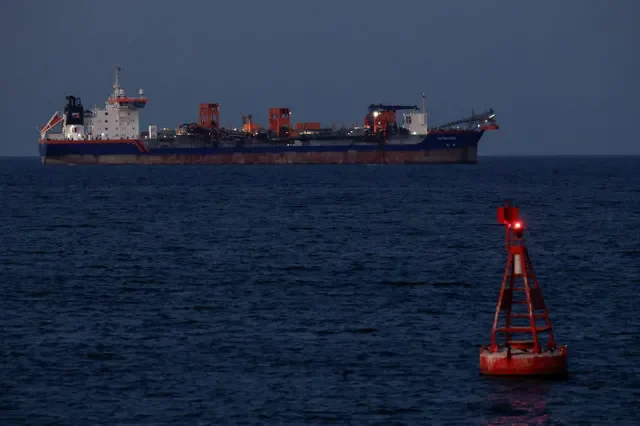
The closure represents a measure of last resort for Tehran, following years of warnings from the Islamic Revolutionary Guard Corps. Analysts suggest the strategic equation shifted following the killing of the Iranian supreme leader, leading the Guards to take a more aggressive stance in what they describe as an existential war. The narrow passage between the Iranian coast and Oman serves as the primary maritime exit for major energy producers, including Kuwait, Iraq, Qatar, and the United Arab Emirates.
The economic ramifications are already being felt globally. Crude oil prices reached their highest levels since 2022, prompting fears of a renewed cost-of-living crisis similar to the one experienced after the invasion of Ukraine by Russia. Beyond energy, the blockade threatens global food security, as roughly one-third of the world’s fertilizers pass through these waters. Global energy markets remain on edge, with utilities such as Pacific Gas & Electric Co. monitoring the potential for broader economic disruptions resulting from the surge in fuel prices.
Securing the waterway presents a significant military challenge. Shipping lanes are only two nautical miles wide, forcing vessels to navigate close to Iranian-controlled islands and a mountainous coastline that offers defensive cover. While the conventional navy of the Islamic Republic is diminished, the Revolutionary Guards utilize asymmetric tactics, including fast attack craft, mini-submarines, and explosive-laden drones. Experts indicate that Tehran can produce up to 10,000 drones per month. Kevin Rowlands, Editor of the RUSI Journal, noted the necessity of international intervention:
The world needs oil to flow through from the Gulf, and so there is planning ongoing to put protection measures in place.
In response to the crisis, France has deployed naval assets, including an aircraft carrier strike group, to the region. French President Emmanuel Macron indicated that a joint protection mission involving India and other Asian nations is under consideration, though it may only commence after the cessation of hostilities. In the United Kingdom, Prime Minister Keir Starmer has held discussions with leaders from Germany and Italy regarding support for commercial shipping. Meanwhile, the Pentagon is evaluating various military options, with General Caine stating:
We're looking at a range of options there.
The current situation mirrors previous disruptions in the region. In Yemen, Houthi rebels managed to severely impact traffic through the Bab al-Mandab Strait for over two years, forcing companies like Denmark[country:{ value:"DK