Indian Banks Hesitant to Offer NDFs After RBI Lifts Curbs
Indian banks avoid rupee NDF trades for clients despite the central bank removing recent curbs. Lenders remain wary of scrutiny over arbitrage activity.

Financial institutions in India are reportedly maintaining a restrictive approach toward offering rupee non-deliverable forwards (NDF) to their clients, despite recent moves by the central bank to ease market constraints. While the Reserve Bank of India (RBI) recently lifted curbs that were established during a period of significant currency volatility, industry sources indicate that many financial institutions remain reluctant to resume normal operations in this segment.
The central bank's decision on Monday to withdraw the April 1 restrictions was intended to normalize the market and allow for the rebooking of cancelled foreign exchange contracts. However, treasury officials from several major banks have noted that they are treating the situation with extreme care, rather than returning to a business-as-usual state.
At this stage, the compliance and supervisory risks are just too high.
The original restrictions were implemented to prevent corporate entities from exploiting arbitrage opportunities between onshore and offshore markets, a practice that intensified after the RBI capped the net open positions of banks. While the focus remains on local currency stability, broader market movements in pairs such as EUR/USD continue to be monitored by traders for directional cues.
The intent behind the relaxation appears to be to facilitate companies with genuine hedging needs.
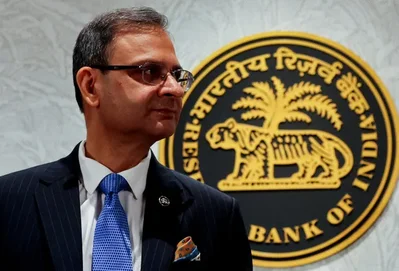
Caution among market participants has been further reinforced by recent remarks from RBI Deputy Governor T. Rabi Sankar. During a recent industry conference, he expressed dissatisfaction with banks that facilitated arbitrage trades for corporate clients, even when such activities were clearly outside the scope of permitted transactions. These comments have led to a consensus that regulatory scrutiny will remain rigorous despite the technical relaxation of rules.
Furthermore, the financial incentive for arbitrage has diminished as market conditions have stabilized. The spread between the one-month dollar/rupee NDF rate and the onshore market has compressed to approximately 7 to 8 paisa. This represents a significant decline from the spread of nearly one rupee recorded when the initial restrictions were first introduced by the central bank.