IMF Cuts 2026 Emerging Market Growth Outlook to 3.9 Percent
The IMF lowered its 2026 growth forecast for emerging economies to 3.9 percent today. Higher energy costs and conflict are straining commodity-importing nations.

The International Monetary Fund (IMF) has lowered its 2026 growth forecast for emerging market and developing economies to 3.9%, down from the 4.2% projected in January. This revision comes as higher energy and food costs, coupled with persistent uncertainty from conflict in the Middle East, weigh heavily on vulnerable, commodity-importing nations. The downgrade for the developing world is notably sharper than for advanced economies, highlighting a heightened exposure to shocks in the price of Brent Crude Oil and West Texas Oil, as well as currency volatility and shifts in investor sentiment.
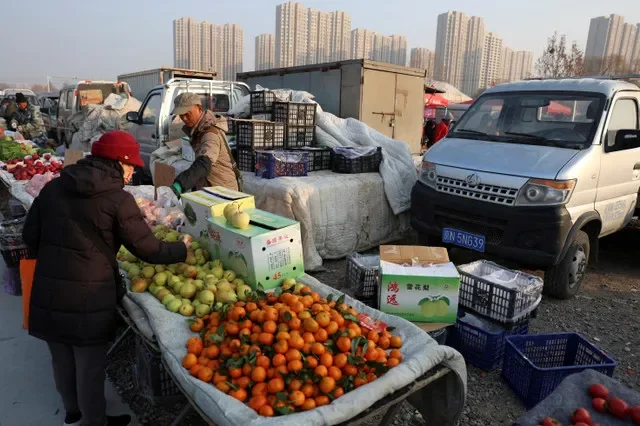
According to the global lender, the impact of ongoing hostilities varies significantly based on a country's proximity to the conflict, trade links, and energy dependence. The IMF noted that policymakers currently face difficult decisions regarding inflation management and growth preservation.
The current hostilities in the Middle East pose immediate policy trade-offs: between fighting inflation and preserving growth and between supporting those affected by the rising cost of living and rebuilding fiscal buffers.
While the current reference forecast assumes the conflict remains contained and begins to ease by mid-2026, IMF Chief Economist Pierre-Olivier Gourinchas warned that the situation is precarious.
And of course, every day that passes and every day that we have more disruption in energy, we are drifting closer towards the adverse scenario.
In an adverse scenario, global growth could slow from 3.1% to 2.5% this year. The fund is also closely monitoring how a stronger currency in the United States affects inflation in developing markets, as it often leads to tighter financial conditions.
Regional performance shows significant divergence. Emerging and developing Asia is expected to remain the fastest-growing region, though growth is projected to slow from 5.5% in 2025 to 4.9% in 2026. The forecast for China was adjusted slightly to 4.4%, as stimulus measures and lower tariff rates helped mitigate the impact of the war. Conversely, India saw its 2026 forecast rise to 6.5%, benefiting from momentum and tariff relief that offset higher energy costs.
The most severe economic impacts are concentrated near the conflict zone. The IMF reduced its forecast for the Middle East and Central Asia by 2.0 percentage points to 1.9%. For the Middle East and North Africa specifically, the outlook was cut by 2.8 points to 1.1%. Saudi Arabia saw its growth projection lowered to 3.1%, while Iran faced one of the largest revisions, with growth cut to -6.1%. In Egypt, growth is expected to reach 4.2%.
In other regions, Sub-Saharan Africa is forecast to grow at 4.3%, with oil importers facing the most strain. Growth in Latin America and the Caribbean was revised up slightly to 2.3%, supported by oil exporters like Brazil, who find some relief in higher global prices.