Global Stocks Fall as Middle East War Pushes Yields Higher
Global shares fell for a third straight session as escalating conflict in the Middle East raised inflation fears. Central banks may raise rates to curb prices.

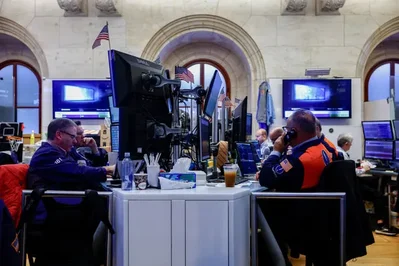
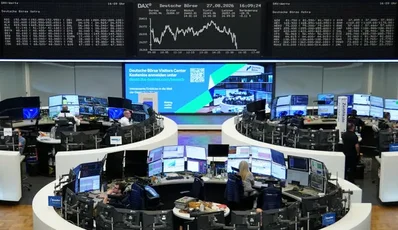
Global financial markets retreated for a third consecutive session on Friday, as the escalating conflict involving Iran prompted investors to brace for a prolonged period of high inflation and restrictive monetary policy. The geopolitical instability has driven a sharp rise in bond yields and a sell-off in equities, with major indices on track for their third straight weekly decline. The latest wave of volatility followed an attack on an oil refinery in Kuwait and the targeted killing of a high-ranking military official by Israel. In response to the growing threat to regional stability, the United States confirmed that thousands of additional troops would be deployed to the Middle East. Furthermore, reports indicate that the administration is considering a blockade of Kharg Island to force the reopening of the Strait of Hormuz, a move that could further disrupt global energy supplies. On Wall Street, the S&P 500 fell 0.91% to 6,546.48, while the Dow Jones Industrial Average shed 270.24 points, or 0.59%, to finish at 45,751.19. The Nasdaq Composite dropped 1.24% to 21,817.10. While most sectors struggled, the energy index remained resilient as crude prices climbed. Fixed income markets saw significant movement as participants adjusted their expectations for interest rates. The yield on the benchmark U.S. 10-year note rose to 4.372%, marking its third consecutive weekly gain. The 2-year note yield, which is sensitive to Federal Reserve policy shifts, rose to 3.928%, its largest three-session jump since May. Scott Welch, chief investment officer at Certuity, noted that while the domestic economy has some energy independence, it remains vulnerable to global price shocks. > "People are starting to factor that into their inflation perspectives, and thats driving yields up, so 4.25% to 4.5% is probably where well be for a while on the 10-year." In Europe, the STOXX 600 index fell 1.14%, mirroring the global trend of weekly losses. Government bond yields across the euro zone rose for a third day, with the United Kingdom seeing its 10-year gilt yield soar to 5.018%, its highest level since mid-2008. In Germany, the two-year yield climbed to 2.661%, reflecting expectations that the European Central Bank may need to deliver rate hikes as early as April to combat renewed inflation risks. Energy markets remained under intense pressure. Brent Crude Oil rose to $109.35 per barrel, while U.S. crude reached $97.33. Natural gas prices have also been highly volatile, with European benchmarks surging earlier in the week following strikes on critical infrastructure. To address the supply crisis, Japan and Canada have offered to assist in securing safe passage for shipping through the Strait of Hormuz. The dollar index gained 0.42% to 99.70, though it was poised for its first weekly decline in three weeks. The euro weakened to $1.1537, while the dollar strengthened against the Japanese yen to 159.08. Fed officials have indicated that the ongoing war and its impact on energy markets are complicating the outlook for monetary policy, with some policymakers calling for a more cautious approach to future rate cuts.