ECB official warns of quick action on inflation risks
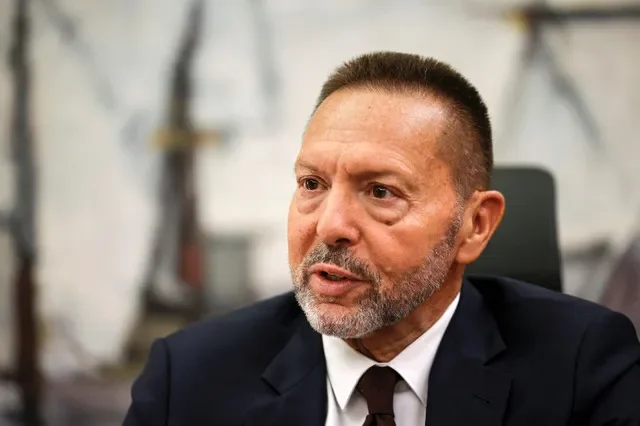
Yannis Stournaras says the ECB must act fast if Middle East conflict causes inflation to drift. He warned that a long war could weaken growth and raise prices.

Yannis Stournaras, the Governor of the Bank of Greece, has cautioned that the European Central Bank (ECB) must respond rapidly to any indications that inflation expectations are beginning to drift. Speaking at a financial conference in Romania, Stournaras noted that the ECB's baseline projections for growth and price stability, established in March, face significant risks if the conflict in the Middle East continues to escalate.
The central bank official highlighted the ongoing challenge of addressing inflation primarily driven by supply-side factors without inadvertently deepening the economic slowdown. He warned that a protracted war could lead to a more adverse macroeconomic environment for the euro area, characterized by weaker economic growth and more persistent inflation than currently projected.
"If signs were to emerge that second-round effects are gaining traction or that inflation expectations are beginning to drift, the ECB will have to respond quickly to help ensure that inflationary pressures do not become entrenched in expectations."
Stournaras, who is also a member of the ECB's policy council, pointed out that the euro area had maintained inflation near its 2% target for nearly a year prior to the latest geopolitical developments. He suggested that this period of stability provides the central bank with some flexibility for future interest rate adjustments. His remarks follow recent signals from ECB President Christine Lagarde, who indicated that the door remains open for rate hikes if the conflict in the Middle East continues to exert upward pressure on prices. Stournaras concluded by noting that the bank has improved its technical understanding of how price shocks transmit into indirect and second-round effects.