China Prioritizes AI and Sets Lower 2026 Growth Target
Beijing today set a 2026 growth target of 4.5% to 5% in a new five-year plan focused on AI. The roadmap prioritizes tech self-sufficiency to counter U.S. curbs.

China has unveiled a comprehensive five-year roadmap to accelerate scientific breakthroughs and integrate artificial intelligence across its industrial economy, framing technological dominance as a core national security goal in its rivalry with the United States. The 15th strategic plan marks a pivot toward technology-driven development, aiming to escape the middle-income trap and counter demographic shifts despite growing structural pressures. President Xi Jinping’s vision focuses on developing new productive forces to insulate the nation from foreign export controls and enhance self-sufficiency.
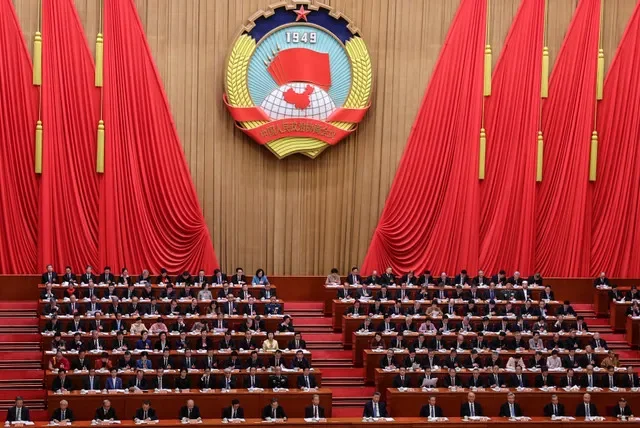
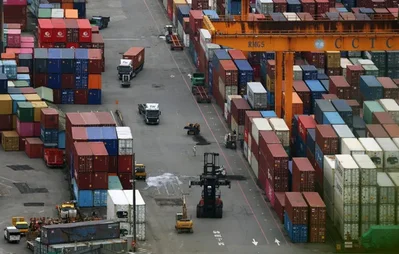
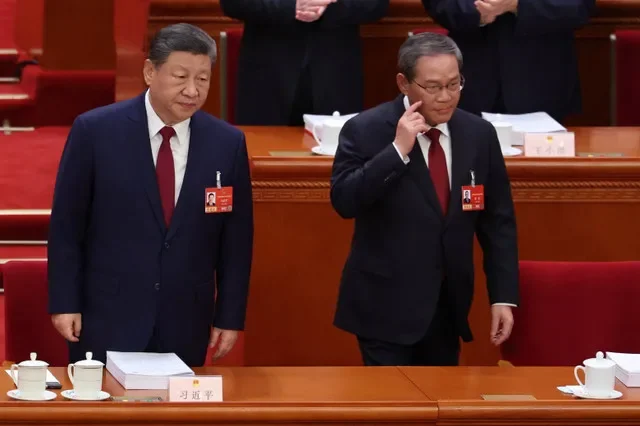
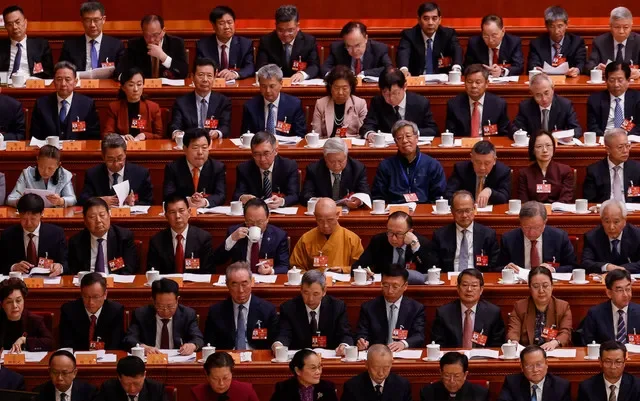
At the opening of the annual parliament meeting, Premier Li Qiang set a growth target of 4.5%–5% for 2026, down slightly from the previous year. While the nation’s trade surplus surged to a record $1.2 trillion, Li acknowledged acute imbalances between strong supply and weak demand, alongside risks from the property sector and local government debt. In response, the government announced 7% increases in both the defense budget and research and development spending. The plan also pledges to maintain a competitive edge in rare earths, materials vital for defense and high-tech systems.
"China’s government remains laser-focused on spurring technological breakthroughs and high-tech investment," said Fred Neumann, chief Asia economist at HSBC Holdings plc.
The five-year plan aims to raise the value-added of core digital economy industries to 12.5% of GDP. Ambitions span biomedicine, quantum technology, and the commercialization of AI-powered humanoid robots. This push follows a year where domestic developers closed the gap with global leaders like OpenAI, which is supported by Microsoft Corporation, and Gemini, developed by Alphabet Inc.. Additionally, the state aims to double its electric vehicle charging stations within three years, building on its current 85% global market share.
Analysts in Singapore and Australia note that the challenge of rebalancing the economy away from investment toward consumption remains significant. While the plan pledges to increase household spending, it lacks specific figures, potentially leading to continued industrial overcapacity and trade tensions. The government plans to maintain a budget deficit of 4.0% of GDP, with special debt issuance quotas set at 1.3 trillion yuan for the central government and 4.4 trillion yuan for local authorities.
Geopolitical tensions also weigh on the outlook. Recent military actions involving Israel and Iran threaten critical trade routes like the Strait of Hormuz. Domestically, Beijing has introduced marginal increases to pensions and medical subsidies to address the demographic downturn, while also focusing on education spending and childcare reforms to support long-term stability.
"It is a high-stakes rebalancing where the government is betting the house on AI and advanced manufacturing," said Andy Ji, Asian FX & rates analyst at ITC Markets.