
China's December CPI Hits 34-Month High Amid Persistent Deflation
China's consumer prices rose 0.8% in December 2025, marking a 34-month high, driven by rising food costs. Despite this, the full-year inflation remained at 0%, falling short of the government's 2% target, while producer prices continued to decline.
洞察:
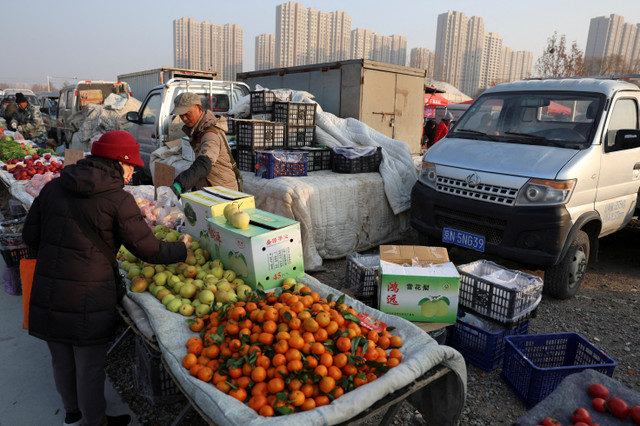
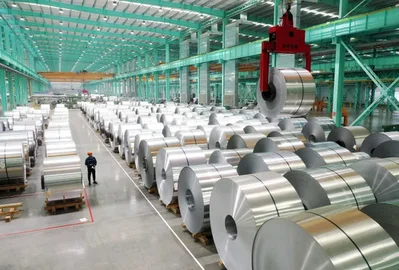
China's consumer price index (CPI) rose 0.8% year-on-year in December 2025, reaching its highest level in 34 months, according to data released by the National Bureau of Statistics (NBS). The uptick was primarily driven by increased food costs, such as fresh vegetables, which surged 18.2%, and beef, which rose 6.9%. Gold jewellery prices also saw a significant increase, climbing 68.5%. Despite these gains, pork prices fell 14.6% during the same period. However, the seemingly positive December figures mask a more troubling full-year picture. The 2025 CPI remained flat at 0%, falling well short of the Chinese central government's policy target of around 2%. This lack of inflation indicates ongoing demand weakness, exacerbated by a prolonged property market crisis and a sluggish job market. Core inflation, which excludes volatile food and fuel prices, held steady at 1.2% in December, unchanged from November. Meanwhile, China's producer price index (PPI) continued to show deflationary trends, falling 1.9% year-on-year in December. Although this was an improvement from the -2.2% recorded in November, the full-year 2025 PPI dropped by 2.6%. This persistent producer deflation, spanning over three years, highlights the ongoing challenges of overcapacity and weak pricing power in the manufacturing and industrial sectors. The Chinese government has acknowledged these economic challenges and is preparing fresh stimulus measures for 2026. Among these is a 62.5 billion yuan allocation from special treasury bond proceeds to local governments for a consumer goods trade-in scheme. The government has also pledged to use monetary policy tools flexibly, including potential interest rate cuts and adjustments to the reserve requirement ratio. Despite these efforts, previous stimulus measures have yielded only modest results in lifting consumer sentiment and containing deflationary pressures. Dong Lijuan dong lijuan, a senior statistician at the NBS, emphasized the structural nature of China's inflation challenges, noting that while December's CPI acceleration is a positive sign, it does not reflect a broad-based recovery in demand. The Chinese economy, valued at $19 trillion, is likely to have met its growth target for 2025, despite slowing momentum in the latter half of the year. However, the ongoing deflationary pressures underscore the limits of current stimulus approaches and pose a significant policy dilemma for Chinese policymakers. As the US Dollar / Chinese Yuan exchange rate remains a critical factor, the performance of the Shanghai Composite Index , Hang Seng Index , iShares China Large-Cap ETF , and iShares MSCI China ETF will be closely watched by investors seeking to gauge the broader economic outlook. The price of Gold may also continue to influence market dynamics as it reflects broader economic conditions. As China  CN navigates these economic challenges, the effectiveness of its policy responses will be crucial in determining the trajectory of both consumer and producer prices in the coming year.
CN navigates these economic challenges, the effectiveness of its policy responses will be crucial in determining the trajectory of both consumer and producer prices in the coming year.