Taylor Says BoE Should Hold Rates Until War Impact Is Clear
Alan Taylor says the BoE should hold rates until the impact of the war in Iran is clear. He sees a high bar for hikes due to a weakening labor market.

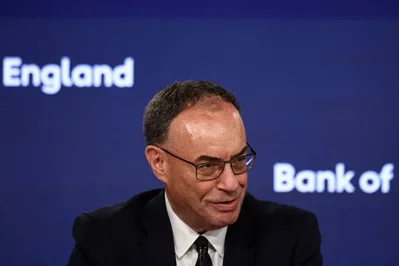
Bank of England policymaker Alan Taylor stated on Thursday that there is currently a high threshold for increasing interest rates in the United Kingdom, suggesting it is better to maintain current borrowing costs until the economic consequences of the conflict in Iran are better understood. Taylor, who had previously advocated for lower rates before the hostilities began, joined a unanimous decision by the Monetary Policy Committee (MPC) this month to keep rates steady, even as some members cautioned that future hikes could be necessary. Addressing a conference in New York, United States, hosted by Exante Data, Taylor highlighted the significant uncertainty surrounding energy prices. He noted that while inflation expectations among consumers have risen alongside manufacturing costs, the risk of inflation becoming unanchored remains low due to a weakening labor market. > Given massive uncertainty around future energy prices, and our starting point, I currently see a high bar to hiking. This sentiment was echoed by Deputy Governor Sarah Breeden, who noted that the current economic environment presents less risk of secondary inflation effects compared to the period following the full-scale invasion of Ukraine by Russia in 2022. Taylor argued that the present shock is more comparable to 2011, when the central bank successfully managed energy price volatility without raising rates or damaging the economy. > Holding policy steady is preferable until the impact becomes clearer. If the current risks diminish, Taylor suggested that interest rate cuts could eventually be considered. However, he warned that the MPC would face more difficult trade-offs if supply disruptions persist and the energy shock intensifies. > If disruptions persist and the shock grows, the MPC will face a tougher choice between high inflation and weaker growth.