
Data Center Expansion Risks Higher Australian Utility Bills
NSW utilities warn that rapid data center growth risks raising household bills. They claim current laws fail to protect consumers from infrastructure costs.

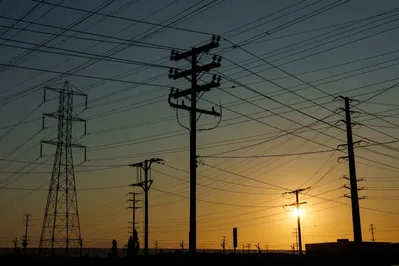
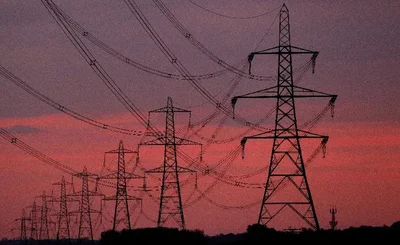
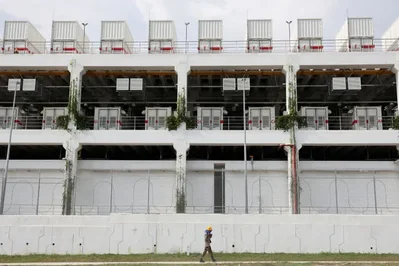
Utilities in Australia are warning that a surge in data center construction, valued at more than A$100 billion ($70 billion), risks driving up utility costs for ordinary households. In formal submissions to a New South Wales parliamentary inquiry, energy and water providers argued that existing regulatory frameworks are inadequate to prevent consumers from footing the bill for the massive infrastructure upgrades required by the sector. The warnings come as the state government faces pressure to regulate the resource consumption of rapidly expanding tech hubs. New South Wales, which is home to Sydney and roughly a third of the national population, has already approved ten major data center projects. These include facilities for MICROSOFT CORP and AMAZON.COM INC, often without specific or enforceable requirements regarding their use of electricity and water. Jason Krstanoski, an executive at the grid operator Transgrid, highlighted the potential for system-wide instability if the growth is not managed carefully. > "Without appropriate policy settings, this growth could place pressure on electricity infrastructure planning, system reliability and ultimately consumer costs." He further noted that the financial burden of these new large-scale loads must not fall on the existing customer base. > "This principle is non-negotiable - existing customers should not subsidise new large loads." Transgrid reported that it has received connection requests totaling more than 10 gigawatts over the past 18 months, which accounts for more than half of the state's current peak demand. Some individual sites are requesting upwards of 1,200 megawatts. Water security is another critical concern. The Water Directorate, representing 92 local utilities, stated that very few regions are equipped to handle the scale of data center growth without compromising local water supplies. These facilities often use vast amounts of water for cooling purposes. Adam Lovell, executive director of the Water Services Association of Australia, warned that the cost of securing alternative water sources to meet public needs could reach billions of dollars. > "If they use potable water that was earmarked for the public, utilities will need to turn to the next available sources, which can cost billions more, to meet community needs, with those costs shifted onto household bills." Abigail Boyd, the Greens lawmaker who initiated the inquiry, said the utilities are sounding a necessary alarm about the lack of transparency in government deals with major tech firms. > "The public have the right to know what state and federal governments are signing us up for when they roll out the red carpet for these data centre businesses."