Asian Stocks Set for Best Week Since 2022 on Peace Hopes
Asian stocks head toward their best week since 2022 as Israel seeks talks with Lebanon. Investors hope that U.S.-Iran talks will reopen the Strait of Hormuz.

Asian equity markets advanced on Friday, positioning regional indexes for their most significant weekly gains since late 2022. The rally follows news that Israel is seeking diplomatic discussions with Lebanon, sparking optimism for a de-escalation of Middle East hostilities and the potential reopening of the Strait of Hormuz.
Iran has identified ongoing military actions in Lebanon as a primary obstacle to a ceasefire agreement with the United States. A resolution would require the reopening of the strait, which facilitates approximately 20% of the world's energy supplies. Diplomatic delegations from Tehran and Washington are scheduled to convene in Pakistan this Saturday.
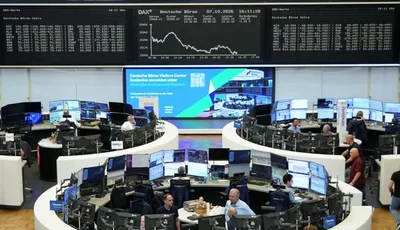
The MSCI Asia-Pacific index excluding Japan rose 0.9% on Friday, marking a 7.3% increase for the week. In China, the ChiNext index led regional gains with a 3.8% jump. Market sentiment was further bolstered as U.S. S&P 500 futures recovered from earlier losses.
"We believe this could be the beginning of the end of the war, and that presents an opportunity for investors to focus on pre-war trends and fundamentals," said Rupal Agarwal, Asia quant strategist at Bernstein in Singapore.
Energy markets remain volatile, with Brent Crude Oil rising 1.5% to $97.33 per barrel. While diplomatic efforts are underway, marine traffic through the Strait of Hormuz remains at less than 10% of normal capacity. U.S. President Donald Trump expressed dissatisfaction with the current situation via social media.
"Iran was doing a very poor job of allowing oil to pass through the strait. That is not the agreement we have!"
In Japan, the Nikkei 225 index climbed 1.8%. Shares of FAST RETAILING CO LTD reached a record high following a strong profit report from the Uniqlo parent company. Meanwhile, the USD/JPY currency pair saw the yen weaken by 0.2% against the dollar. To ensure domestic energy stability, the Japanese government announced plans to release 20 days of oil reserves starting in May.
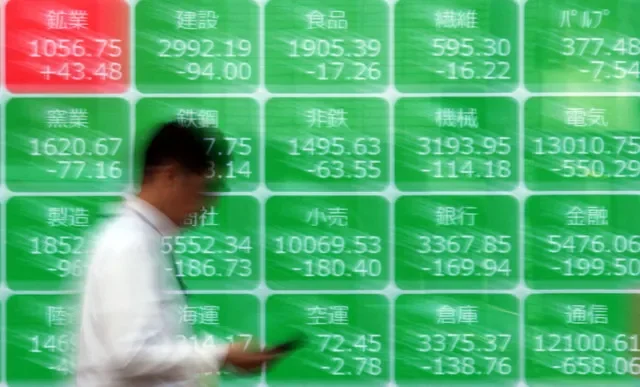
South Korea’s KOSPI index rose 1.4%, marking its strongest weekly performance in nearly five years. This growth occurred despite a warning from the Bank of Korea regarding the impact of Middle East tensions on inflation and economic growth. The central bank maintained its current interest rate policy on Friday.
"With a new governor arriving in late April, the BOK delivered a carefully calibrated message to leave options open on future policy decisions," analysts from ING wrote in a research report.
Economic data from the United States showed an increase in weekly jobless claims to 219,000, while the Core PCE price index rose 0.4% for the second consecutive month, representing a 3.0% annual increase. In the cryptocurrency sector, bitcoin and ether both recorded slight declines as investors monitored the evolving geopolitical landscape.