
US Energy Prices Expected to Remain High Through the Year
Analysts warn that US fuel prices will remain high despite President Trump's claims of a rapid drop. Market data and forecasts suggest recovery will be slow.

The United States is currently navigating a period of intense energy price volatility as President Donald Trump and congressional Republicans wager that the oil-price shock from the Iran crisis will be short-lived. Despite administration optimism, market analysts and traders suggest that fuel costs for American drivers will remain high long after the geopolitical tensions subside.
Oil prices have surged significantly, with U.S. crude surpassing $100 a barrel for the first time since the 2022 Russia-Ukraine conflict. Diesel prices have also climbed above $5 a gallon, marking their highest levels in years. These increases are largely attributed to the effective blockade of the Strait of Hormuz, a vital choke point for global energy transit.
"It’s going to take time for those prices to come back down," said Matt Smith, an analyst at energy consultant group Kpler.
President Trump has maintained that higher energy costs are a manageable consequence of neutralizing regional threats, predicting that prices will drop rapidly once military objectives are achieved. However, government forecasts and seasonal demand patterns suggest a more persistent trend.
"Its the most in-your-face reminder of affordability concerns, and its almost impossible to convince voters of some kind of contextual case that outweighs their emotional reaction," said Chris Borick, a pollster and political science professor at Muhlenberg College.
The White House remains defiant, maintaining that prices will collapse once military objectives are met. White House spokeswoman Taylor Rogers stated that once the Iranian regime is neutralized, gas prices will drop rapidly, potentially to levels lower than before the strikes began.
"Once the military objectives of Operation Epic Fury are completed and the Iranian terrorist regime is neutralized, oil and gas prices will drop rapidly—potentially even lower than before the strikes began," said White House spokeswoman Taylor Rogers.
The U.S. Energy Information Administration has significantly adjusted its projections, now expecting Brent Crude Oil to average $79 a barrel in 2026, a 37% increase from its previous forecast. Retail gasoline in the U.S. is expected to average $3.34 a gallon, reflecting a 15% upward revision.
Strategic efforts to stabilize the market include the release of 200 million barrels from the Strategic Petroleum Reserve and the easing of certain sanctions on Russian energy exports. Despite these interventions, analysts like Florence Schmit of Rabobank warn that the recovery will be slow.
"Even if they signed a peace deal tomorrow, it would take months before we see a full resumption of traffic and energy flows," Schmit said.
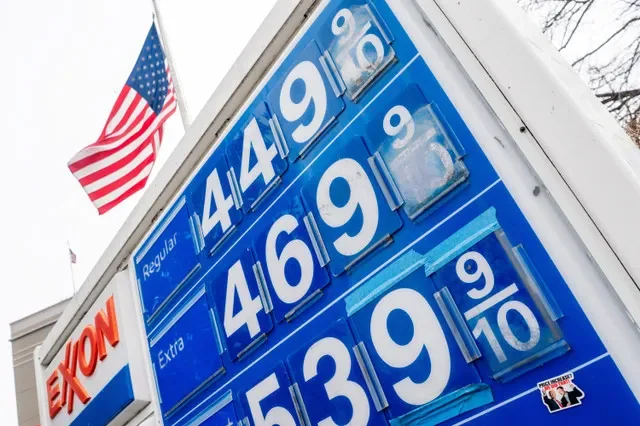
As the national average for regular fuel reaches $3.79 per gallon, the political implications for the upcoming midterm elections remain a focal point for both parties as they attempt to address voter concerns regarding the cost of living.