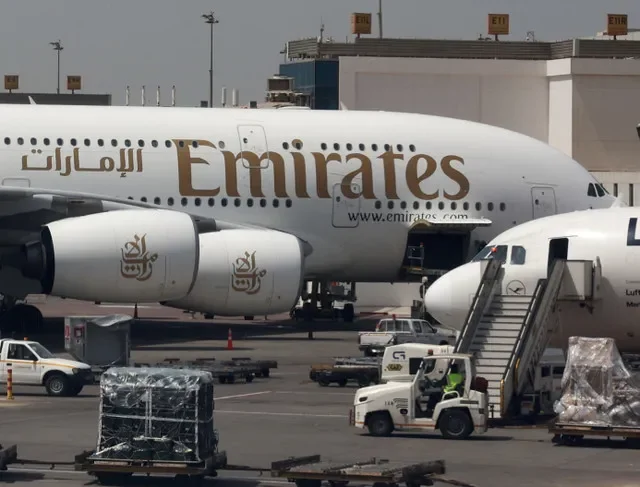
The financial strain is already evident in the outlook for major carriers. DELTA AIR LINES INC has forecasted lower-than-anticipated profits for the second quarter, citing an expected $2 billion increase in fuel expenses. To mitigate these costs, the airline plans to implement broad capacity reductions. In major hubs like Singapore and Hong Kong, analysts observed that while the ceasefire pushed prices for West Texas Oil and Brent Crude Oil below the $100 per barrel mark, jet fuel prices remain disproportionately high.
Despite these operational headwinds, the stock market saw a wave of optimism. In Australia, QANTAS AIRWAYS LTD shares jumped by more than 9%, while AIR NEW ZEALAND LTD in New Zealand saw a rise of over 4%. CATHAY PACIFIC AIRWAYS gained 5%, and in India, INTERGLOBE AVIATION LTD rose by 8%. European markets mirrored this trend, with TUI AG up 12%, WIZZ AIR HOLDINGS PLC gaining 10%, AIR FRANCE-KLM climbing 14%, and Lufthansa advancing 11%.
The maritime and tourism sectors face their own set of challenges. TUI AG is currently managing two cruise ships that have been stranded in Abu Dhabi and Doha since the onset of hostilities. Even with a ceasefire in place, it is expected to take at least four weeks to prepare these vessels for active service. Furthermore, the broader Middle Eastern tourism industry, valued at approximately $367 billion, is expected to suffer from a lingering safety perception issue.
You basically have a tail of around seven months post ceasefire of sentiment impact, Goldring said, with the perception of safety coming back quite gradually.
According to Aaron Goldring, an economist at Oxford Economics, the return to pre-conflict travel levels will be gradual as travelers wait for sustained stability in the region.