Every Advanced Chip on Earth Is Printed by One Machine, and the Rivals Quit on Purpose
Tony P.IUX24 Research Team

Latest version only
TopicsTrade & Geopolitics


Latest version only
半導體與硬件2026年9月23日
If this company vanished tomorrow, how long until someone else could do its job? Sort the AI industry by that one question and profit lines up with the answer.
半導體與硬件2026年9月23日
The fastest chips ever built spend much of their time waiting for data. That one fact turned memory from a commodity into an execution race between three companies.
半導體與硬件2026年9月23日
A 10% edge disappears into integration work. Buyers aren't buying a chip, they're buying a working system. That's why the best challengers ended up as parts of the platform they set out to replace.
One machine, one light source, every advanced chip on Earth.
Every leading-edge chip in the world — the ones in your phone, in your laptop, in every AI accelerator ever shipped — had its finest circuitry printed by a machine built by one company in the Netherlands. There is no second supplier. Not a weaker one. Not an expensive one. None.
How that happened is stranger than the fact itself.
To print small features you need short wavelengths of light. A fine brush draws finer lines than a thick one. For years the industry pushed existing light sources further with increasingly clever tricks, and then physics stopped cooperating.
So the industry moved to extreme ultraviolet: 13.5 nanometres. And immediately hit a wall, because nothing in the normal world produces EUV light. No lamp is bright enough.
The solution that actually works, in production, today:
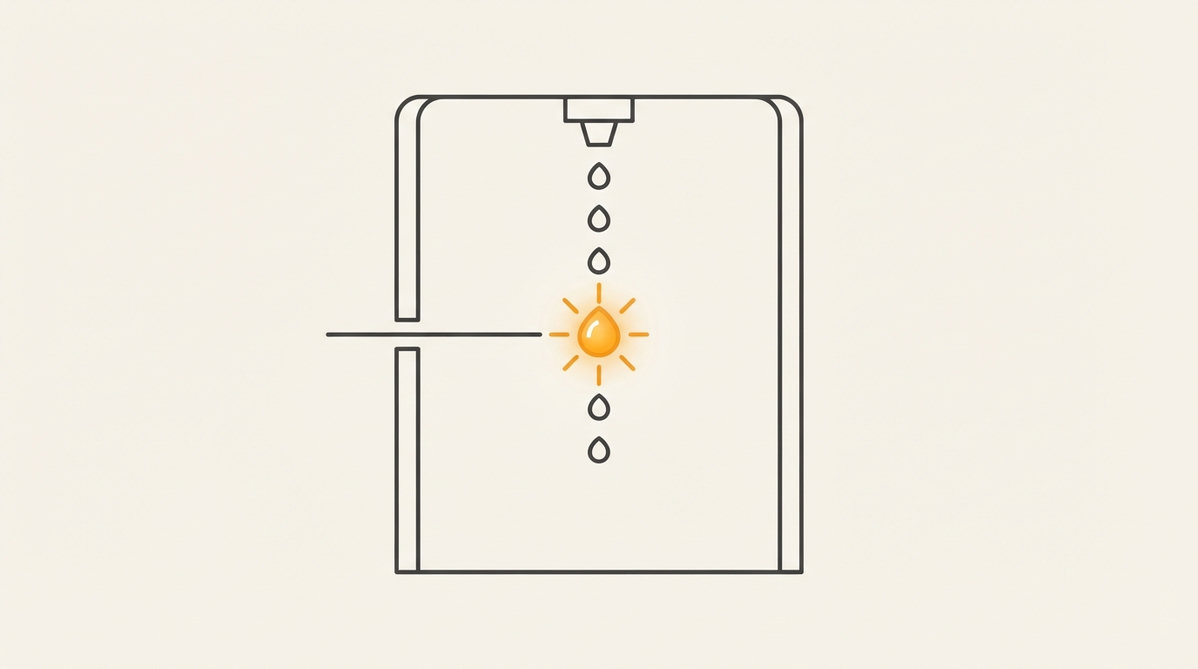
A stream of molten tin droplets is fired through a vacuum chamber. A high-power laser hits each droplet mid-flight and vaporises it into plasma. The plasma emits EUV. This happens tens of thousands of times per second, every droplet meeting the laser at exactly the right place at exactly the right instant, continuously, for years.
One droplet, one laser hit, one flash of EUV. Then again, tens of thousands of times a second.
That is not a description of an experiment. That is how the chips in your pocket were made.
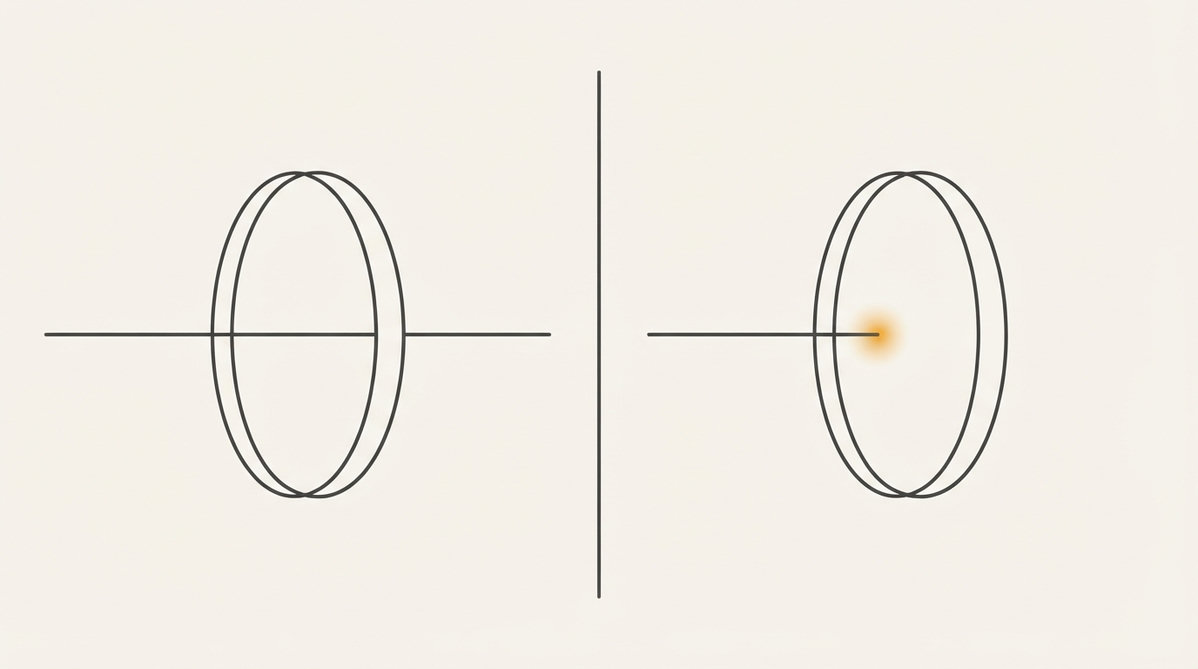
EUV is absorbed by almost everything. It won't pass through glass. It won't pass through air. It doesn't even make it across a room.
Ordinary light passes through a lens. EUV dies at the surface, so every lens becomes a mirror.
So the entire machine changes shape. The light path is a vacuum. Every lens is replaced by a mirror, because you cannot shine this light through anything. And those mirrors are polished to a precision that only makes sense in comparison: scale one up to the size of Germany, and the largest bump on its surface would be under a millimetre.
The masks stop being transparent stencils and become mirrors too.
The finished machine weighs around 180 tons, ships in multiple cargo planes, and takes months to install. There are a few hundred of them operating on the planet. The company builds dozens more per year.
ASML is the name on the box, but the box is a coalition.
ZEISS builds the optical system — those mirrors. Trumpf builds the high-power lasers that hit the tin. Strip either out and there is no machine. Both are deep, old, specialised German engineering firms that spent decades getting good at one thing.
This is the pattern the whole industry runs on, and it repeats at every layer: the famous company is an integrator sitting on top of a handful of suppliers nobody outside the industry can name.
Here is the part that changes how you read the word "monopoly."
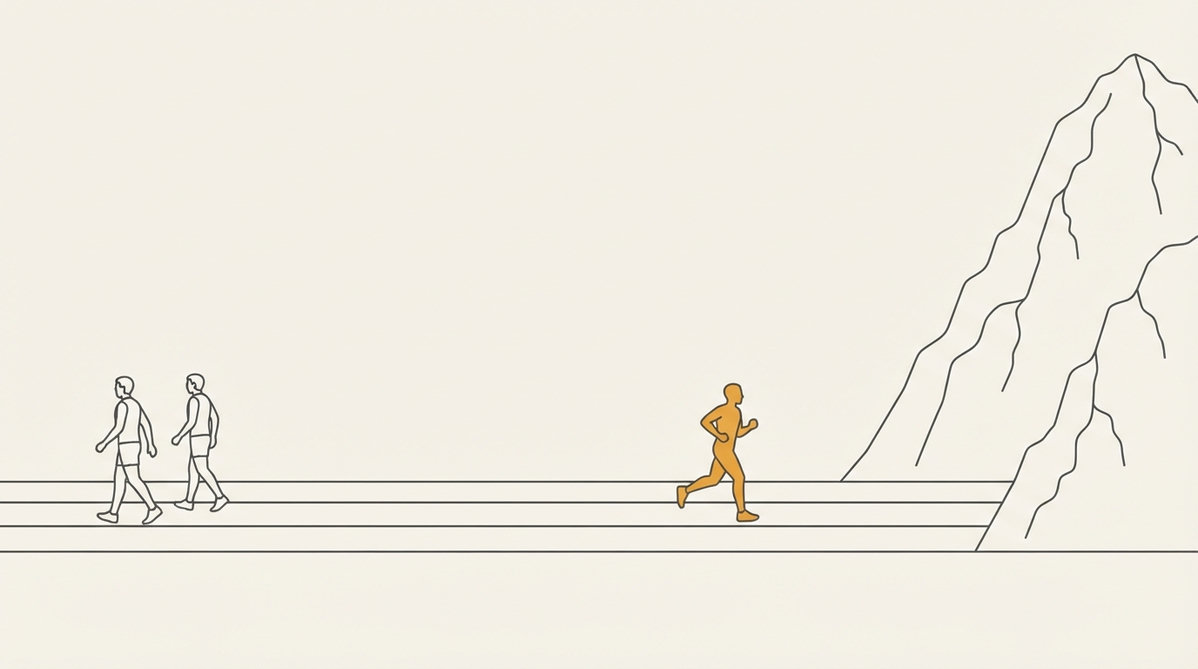
Nikon and Canon are not amateurs. They make lithography machines. They sell them today for older manufacturing processes. Both looked at EUV, studied it seriously, and concluded that the development cost could not be justified.
So ASML didn't win the EUV market by beating rivals. It won because everyone else did the arithmetic and walked away, leaving one company holding a problem expensive enough that being alone with it is the prize.
Nobody was beaten. The other two looked at the mountain and walked back.
That is a durable position, and it is also a fragile one. There are only a handful of customers on Earth capable of buying these machines. If a fab build slips, demand moves in steps, not percentages. Export controls decide which countries can receive them at all. And the newest, larger generation only sells if the performance gain justifies a much higher price.
The revenue keeps arriving long after the sale, though. These systems stay in service for decades, generating service contracts, spare parts, software updates and upgrades. Every installed machine is an annuity with a twenty-year tail.
China cannot purchase EUV systems. That blocks the most direct path to the most advanced manufacturing processes.
It does not block advanced chips entirely. Companies like SMIC have pushed older lithography much further than expected by using additional patterning steps — printing several times with older light to achieve what one EUV exposure would do. Huawei has shipped real products built this way.
The bill arrives as cost, complexity and yield. More steps means more chances for a defect, more machine time per wafer, more scrap. It is a workaround that functions and does not scale gracefully.
Which is the honest framing of the whole export-control question: the constraint isn't that the chips are impossible. It's that they're expensive, and that the gap is measured in years of catch-up against a target that keeps moving.
One company. A few hundred machines. Every advanced chip in the world.
Not because it crushed anyone. Because the problem got so expensive that being the last firm willing to solve it turned into the most defensible position in modern industry.
If you want one sentence to remember this by: ASML's moat is that its competitors read the same research and decided it wasn't worth it.
Comments