This Rate Hike Won't Land on Your House. It Lands on the AI Buildout.
Tony P.IUX24 Research Team

เห็นเฉพาะฉบับล่าสุด



หัวข้อที่เกี่ยวข้องBonds

เห็นเฉพาะฉบับล่าสุด
Ten steps, eleven minutes. Not investment advice.
Each step below is one link. Read them in order and the last one follows from the first.
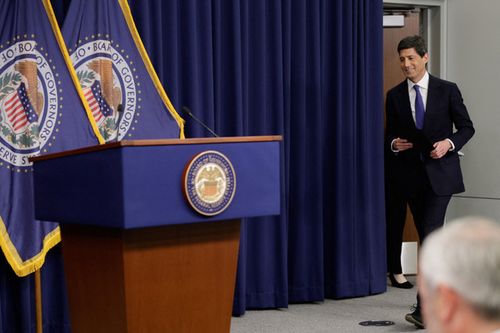
On September 16 the Federal Reserve raised its benchmark rate by a quarter point, to 4%. First increase in more than three years.
The vote was 12–0. Seven weeks earlier, in July, the same committee had split 9–3 — and the nine were the ones who wanted to wait. By September, nobody did.
What changed was the summer's inflation data. Chair Kevin Warsh's reading of it: inflation isn't going away on its own, and rates aren't high enough to slow spending.
A quarter point sounds small. It isn't, because the Fed's rate is the floor everything else is built on. The same day, big US banks moved their prime lending rate to 7%. Hong Kong, whose currency is pegged to the dollar, raised its own base rate to 4.25% right behind the Fed. And the 10-year US Treasury yield — the rate almost every long-term loan on Earth is priced from — had already reached about 5%, its highest since 2007.
Fed benchmark rate | 4% (+0.25) |
Vote in September | 12–0 to raise |
Vote in July | 9–3 to hold |
US bank prime rate | 7% |
10-year Treasury yield | ~5%, highest since 2007 |
Seven weeks from 9–3 to 12–0. The summer's inflation data did the arguing.
Since 1965 the Fed has run 11 tightening cycles — stretches where it raises, then raises again. The smallest added 1.75 percentage points. The biggest added 13. A typical one lasted about a year and a half and added close to 4 points.
Only once did the Fed raise a single time and stop: March 1997, under Alan Greenspan. He was cutting again 18 months later.
Nobody at the Fed is describing a 1997:
History isn't comforting about where cycles end, either. New York Fed researchers counted 14 of them between 1955 and 2009:
How the cycle ended | Times |
|---|---|
Recession within 18 months of the last hike | 10 |
A credit crunch and jump in unemployment that many economists, Milton Friedman among them, count as a recession | 1 |
Soft landing | 3 |
Three soft landings in half a century. So the number that matters isn't this hike. It's what a cycle does once it starts running — and where it lands.
One step is lit. The staircase doesn't end there.
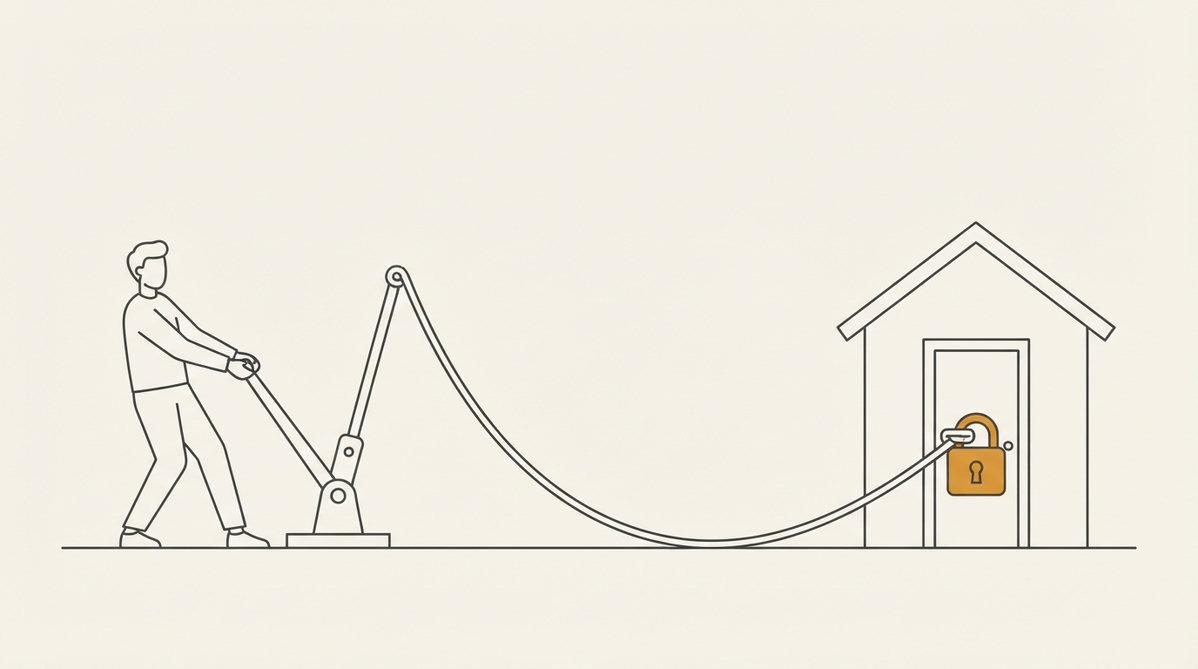
For about seventy years the path from the Fed to your life was simple, and it ran through your house.
Since the Second World War, housing has been the most direct lever the Fed has. Pull it, and spending across the country slows within months.
Hold on to that picture. The next step is why it no longer works.
Only about 40% of American households have a mortgage at all. And of those:
Mortgage rate already locked in | Share of mortgaged households |
|---|---|
Below 6% | 78% |
Below 5% | about two-thirds |
Below 4% | about half |
A new 30-year mortgage now costs 6.95%, a 20-month high. If you're sitting on 4%, you are not selling your house to take out a 7% loan. The Fed's own July report to Congress has a name for this: the rate lock.
You can see it in sales. Existing homes are selling at about 4 million a year, against a 15-year average near 5 million. Last year was the slowest since 1995.
You can't freeze a market that's already frozen. The Fed's favourite lever is attached to something that has stopped moving — so the force of this hike has to land somewhere else.
The lever still moves. The rope just isn't pulling anything.
Nineteen days before the hike, Warsh said where he thought the money was going: "ever-expanding pools of capital are pouring into AI-related infrastructure of all sorts."
That's the chair of the Fed pointing at the data centres. Here's the size of what he's pointing at:
Buildout | Share of the US economy, per year |
|---|---|
Electrifying the country | ~1% |
The interstate highway system | ~1.5% |
Railroads in the 1800s | ~2.5% |
The AI buildout, as planned | ~2.8% |
The biggest thing America has ever built. And the companies at its centre are the most profitable that have ever existed, so the natural guess is they're paying cash.
They're not. JPMorgan estimates that everything they can raise themselves — operating cash flow, share sales, all of it — covers roughly a quarter. Around $4 trillion is expected to be borrowed.
Watch the bond sales of the five biggest AI spenders:
Period | Bonds issued per year |
|---|---|
2020–2024 | ~$35B |
2025 | $93B |
2026, January to July only | $132B |
Risk advisory firm Chatham Financial puts this year's AI infrastructure spend above $830 billion — about half the volume of the entire US investment-grade bond market, two-thirds of all leveraged loans, and more than the whole high-yield bond market. Vanguard sees capital spending at these companies above $1 trillion a year for the next three years.
So this isn't one cheque. It's a standing appointment with the bond market, every year, for the rest of the decade. Even the investors are borrowing to invest: SoftBank launched an $11 billion bond sale this month to fund its stake in OpenAI.
Which means the price of money isn't a detail in the AI story. It's the story.
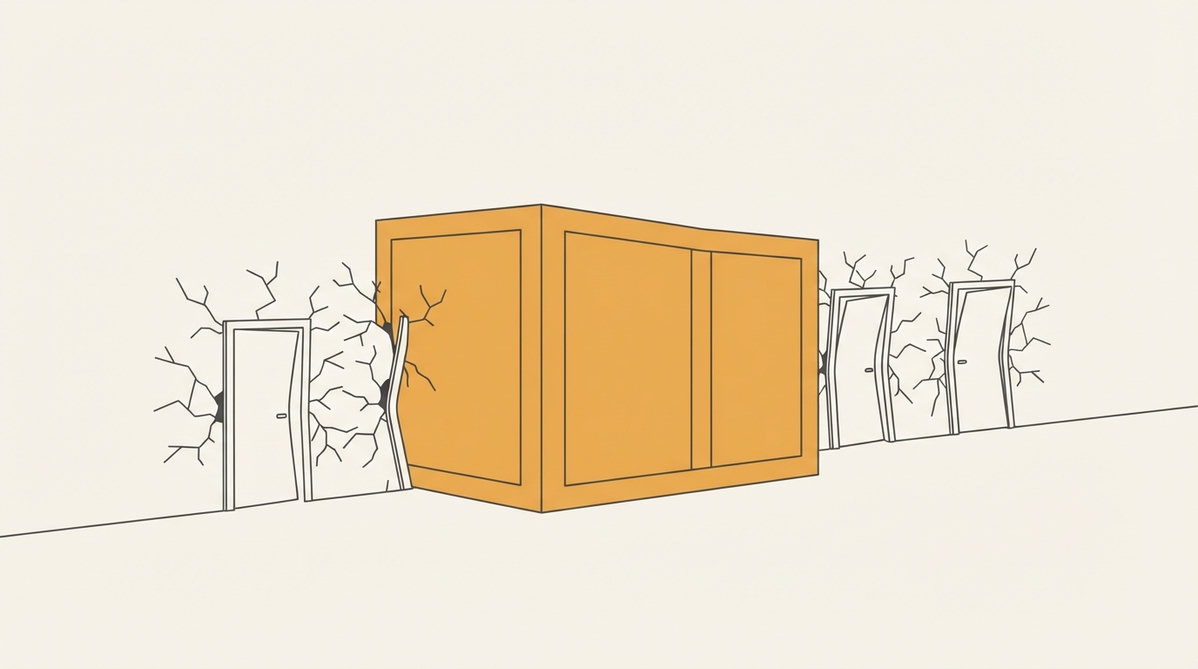
One industry, trying to fit through every door in the credit market at the same time.
When a company borrows by selling bonds, it pays what the government pays, plus a little extra on top. That extra is the spread. It's the lender's nervousness, written as a number.
This year the spread on the five big AI spenders widened by about 0.30 percentage points. The rest of the investment-grade market widened by about 0.02. Fifteen times the move — on some of the most profitable companies in history. Bond buyers are now openly demanding concessions on AI debt, while ordinary corporate borrowers still find buyers easily.
And those five are the top of the ladder. Step down:
Who is borrowing | Extra cost over the big five's own bonds |
|---|---|
The big five themselves | baseline |
Debt funding individual data-centre projects | about +1 point |
Project debt rated junk | about +2 points |
Lower down, some of that debt isn't finding buyers at all. Banks are holding more data-centre project loans on their own books — including loans tied to an Oracle-leased site in New Mexico, where the debt sale stalled.
Same market, two prices: one for ordinary borrowers, a higher one for anything with AI in the name.
CoreWeave rents GPUs to the rest of the AI industry. A few months ago it put a $2.6 billion loan out to lenders. Halfway through, the lenders sent it back with new terms:
Terms 2 to 4 all say the same thing in lender language: we want to be sure there's money left when it's our turn. The loan cleared at 10.4%.
Over one year, CoreWeave's interest bill went from $267 million a quarter to $640 million. In the second quarter, interest alone ate 42 cents of every dollar of adjusted earnings.
That's the bottom of the AI market being repriced in real time — while the thing is still being built.
Out of every dollar earned, 42 cents now goes to the people who lent it.
Here's the question nobody in the industry likes to say out loud: at what borrowing cost does a data centre stop being worth building?
One compute-pricing firm modelled a single GPU cluster at different costs of money:
Cost of capital | Result |
|---|---|
6% | clears comfortably |
10% | barely clears |
~11% | break-even |
12% | underwater |
Now line up who pays what on new deals:
Borrower | Pays | Against the ~11% line |
|---|---|---|
Established companies with investment-grade balance sheets | 6–8% | above water |
Late-stage AI companies with strong revenue | 10–14% | standing on the line |
Earlier-stage, venture-backed AI companies | 15–20% | already under |
The top clears. The middle is standing right on the line. The bottom is already underwater. And the line isn't the thing that's moving — the borrowing cost is.
Same water, three heights. The level is set by the price of money.
A borrowing cost isn't something you pay once. It's rent. And it resets two ways.
The fast way: floating debt. A lot of the debt at the bottom of this market floats — it's priced off an overnight rate that moves with the Fed, plus a fixed margin. That CoreWeave loan is the overnight rate plus 5.5 points, nearly 10.5% all-in. When the Fed raised last week, that loan got more expensive before its next payment was even due.
The slow way: rolling over. Bonds at the top of the market are fixed. But every bond comes due, and when it does, almost nobody pays it off. They borrow again at whatever the market charges that morning. A company that borrowed cheaply three years ago doesn't get that rate back.
Fast reset | Slow reset | |
|---|---|---|
Who | Bottom of the market | Top of the market |
How | Floating rate follows the Fed | Fixed bonds mature and are re-borrowed |
When it bites | Next payment | Next maturity |
The average tightening cycle since 1983 added more than 3 percentage points. And this industry can't borrow everything at once — it borrows every year. So the largest capital project in American history is about to start paying more for the debt it still needs.
That's what's new about this cycle. In the past, a hike landed mostly on demand: mortgages, credit cards, car loans. This time the biggest impact lands on supply: companies carrying enormous debt to build the future.
It's also the part people get wrong about rate hikes. For most borrowers, a hike doesn't break anything the day it lands. It breaks things the day someone goes back for more money, and that money costs more than it did last time.
Every rollover prices off this number. It's the highest it has been in nineteen years.
It's tempting to shrug and let the AI companies sort out their own debts. The problem is that AI isn't just growing fast. It is the growth.
Apollo's chief economist tracks how fast data-centre spending is growing as a share of the economy:
Boom | Growth as a share of GDP, per year |
|---|---|
The 1990s telecom buildout | ~0.15 points |
The housing boom, 2002–2005 | ~0.5 points |
Data centres, now | ~0.85 points |
Nearly twice the pace of the housing bubble. We all remember how that one ended.
JPMorgan went back twenty years and charted what the big five tech companies do with each dollar of revenue. Capital spending never took more than 13 cents. This year it takes about 41. For the first time on that chart, free cash flow goes negative. Every year from here, more has to be borrowed — at a rate that is going up.
The warnings are no longer coming only from sceptics. The Bank for International Settlements — the central banks' own bank — said this month that rising tech debt and leverage leave the AI rally vulnerable. Private-credit funds, big lenders to this industry, are still fielding heavy withdrawal requests: 14.7% of shares at Apollo's flagship fund this quarter, against the 5% it will buy back.
To be fair to the other side: nothing has broken. Nobody is pulling back spending. Lenders are still showing up — Japan's Nippon Life plans nearly $13 billion of US infrastructure lending aimed at data centres, precisely because the spreads are attractive. A wide spread is a warning to the borrower and an invitation to the lender.
But no damage yet is not the same as safe.
When the central banks' bank starts talking about your leverage, it's no longer a niche worry.
Five things to watch. None of them need a forecast:
Watch | What it tells you |
|---|---|
The 10-year Treasury yield | The base price of every long loan. Around 5% is a nineteen-year high. |
The spread on AI-linked bonds versus everyone else | How nervous lenders are. It moved 15× the rest of the market this year. |
The Fed's October and December meetings | Whether this is 1997 or a real cycle. |
Interest as a share of earnings at GPU renters | Where the strain shows first. CoreWeave is at 42 cents per dollar. |
Big-five capital spending as a share of revenue | How much has to be borrowed next year. 13 cents was the old ceiling; now it's about 41. |
The rate was never the story. The story is who has to come back for more money, how often, and at what price.
Events are linked inline to their IUX24 reports. Historical and market figures come from the research named where they appear — JPMorgan, the New York Fed, the Conference Board, Chatham Financial, Vanguard, Apollo and the US Census Bureau.
ความคิดเห็น