The MSG Company That Can Halt Every AI Chip on Earth
Tony P.IUX24 Research Team
เห็นเฉพาะฉบับล่าสุด
หัวข้อที่เกี่ยวข้องCorporate Strategy


เห็นเฉพาะฉบับล่าสุด
เซมิคอนดักเตอร์และฮาร์ดแวร์23 ก.ย. 2569
If this company vanished tomorrow, how long until someone else could do its job? Sort the AI industry by that one question and profit lines up with the answer.
เซมิคอนดักเตอร์และฮาร์ดแวร์23 ก.ย. 2569
The fastest chips ever built spend much of their time waiting for data. That one fact turned memory from a commodity into an execution race between three companies.
เซมิคอนดักเตอร์และฮาร์ดแวร์23 ก.ย. 2569
A 10% edge disappears into integration work. Buyers aren't buying a chip, they're buying a working system. That's why the best challengers ended up as parts of the platform they set out to replace.
A seasoning sachet and a processor. One of them is the bottleneck.
You know Ajinomoto from the little red bag in the noodle aisle. Monosodium glutamate. A Japanese food company, founded in 1909, famous for making things taste better.
Now open an AI accelerator worth tens of thousands of dollars. Under the processor, under the memory stacks, there is a slab of dense wiring called the package substrate. Between every layer of that wiring is a thin insulating film. Ajinomoto makes that film, and says it holds more than 95% of the market for high-performance packages.
Not a joke. Not a coincidence in the naming. The same company.
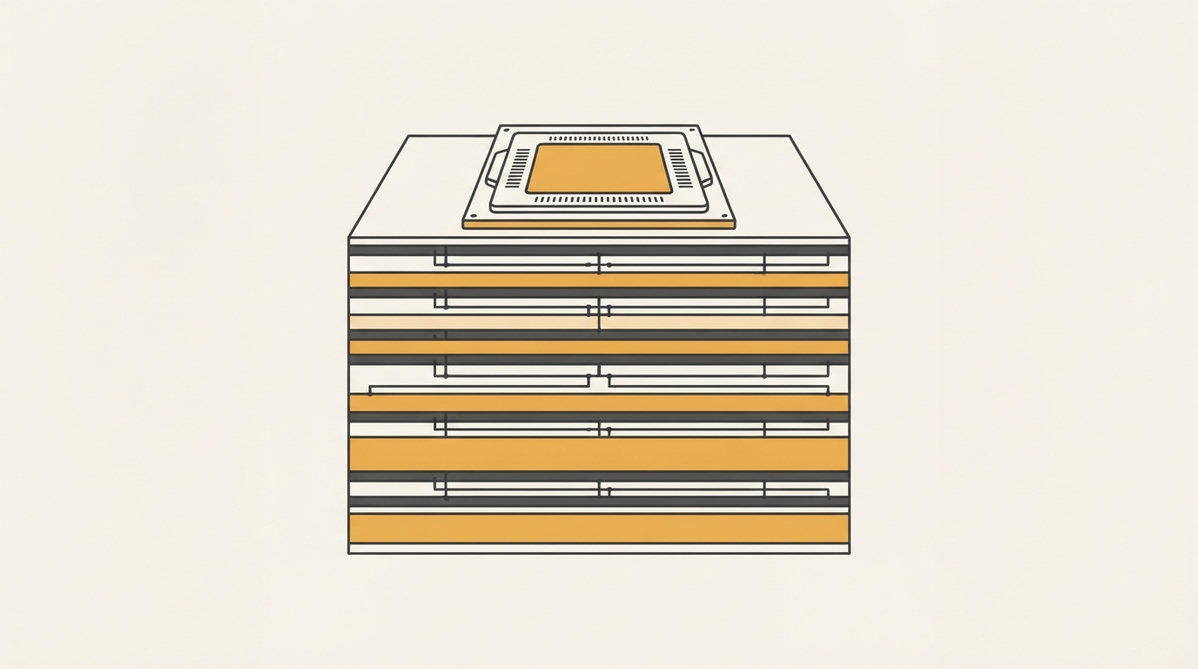
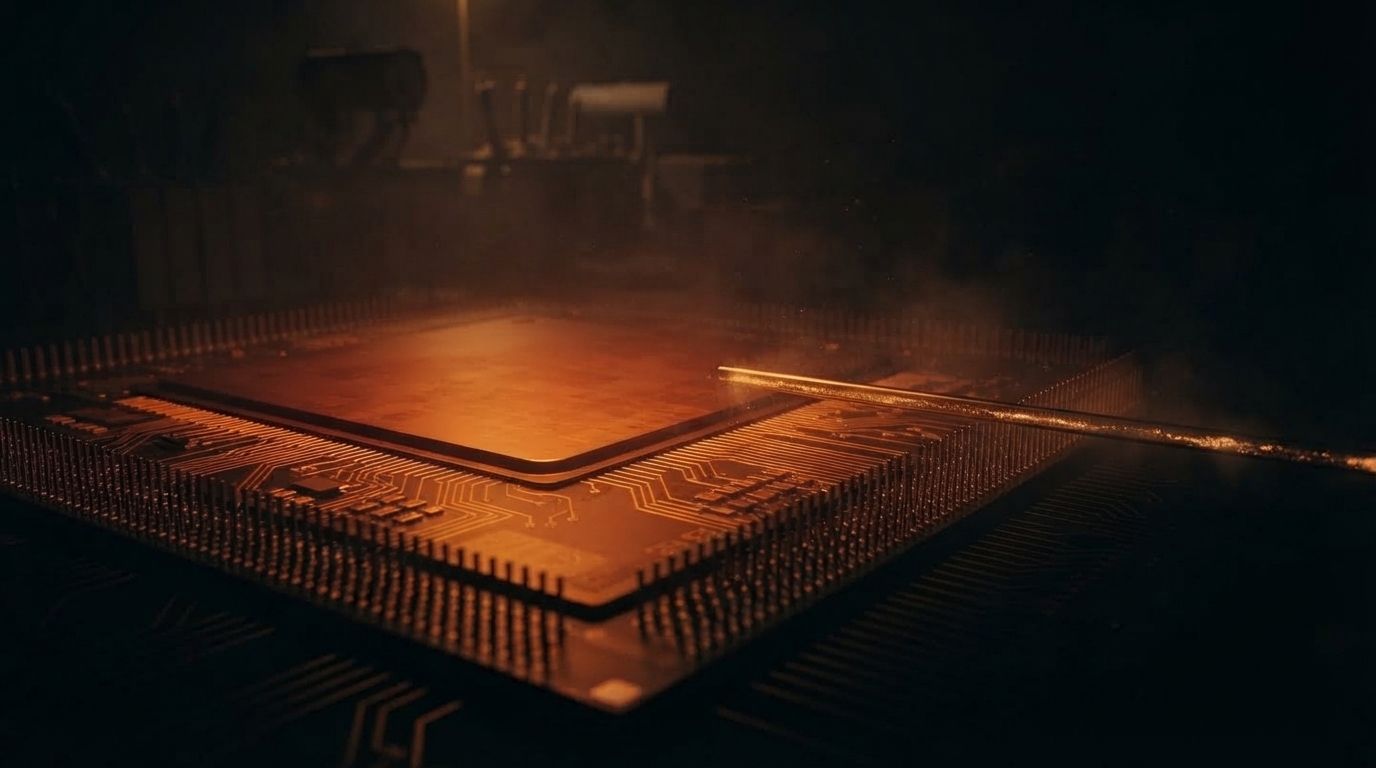
A modern accelerator is not one chip. It is several pieces of silicon — logic dies, memory towers — sitting on an interposer, sitting on a substrate, which finally connects the whole thing to the board. That substrate is a sandwich: layer of wiring, layer of insulation, layer of wiring, over and over, with the wires packed in far tighter than any ordinary circuit board.
Wiring, film, wiring, film. The amber layers are the part almost nobody else makes.
The insulation is what keeps those layers from talking to each other. It has to stay flat, stay stable through years of heat cycling, not absorb moisture, not crack, not drift. It is also, in dollar terms, one of the cheapest things in the box.
Here is the part worth remembering.
A competitor can make an insulating film. Sekisui already does. The problem is not chemistry — it is that nobody wants to be the person who swapped the material inside a product worth tens of thousands of dollars per unit and then found out two years later that it delaminates at 95°C.
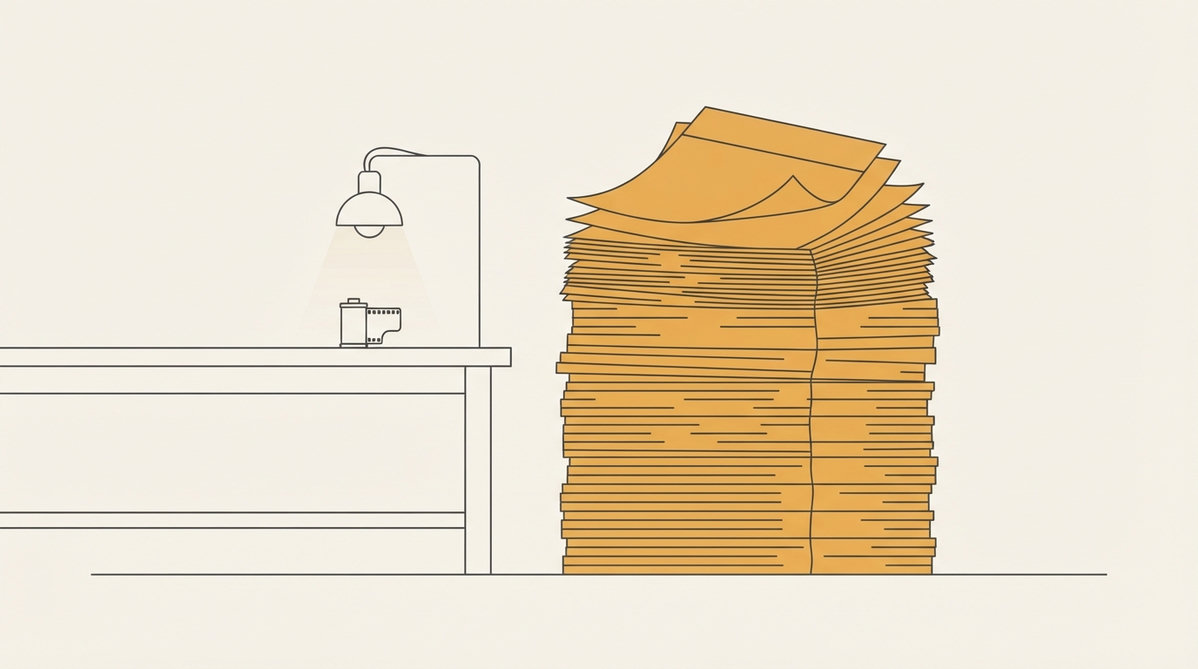
So a replacement has to be qualified: tested through heat, electrical stress, humidity, and time, against a package that itself took years to design. That qualification runs for years. During those years, the incumbent keeps shipping.
The replacement film is ready. The testing it has to sit through is the moat.
That's the moat. Not a patent, not a factory, not a price. A calendar.
Once you see it, you see it everywhere in this industry.
Ajinomoto is the most quotable example, not the only one. Underneath every advanced chip there's a layer of suppliers whose products cost almost nothing relative to the finished part and whose absence stops everything.
Shin-Etsu and SUMCO — silicon wafers. Ultra-pure silicon, pulled as a single crystal, sliced, polished until the surface is flatter than anything you have ever touched. Building and qualifying new wafer capacity takes years.
JSR and Tokyo Ohka Kogyo — photoresist. The light-sensitive coating that holds the pattern. It's qualified against a specific manufacturing process at a specific factory. Switching suppliers is not a purchasing decision, it's a multi-year project.
AGC and Hoya — mask blanks. The masks that carry the circuit pattern into the machine. For extreme ultraviolet light, those masks are not transparent sheets. They're mirrors, because EUV light is absorbed by almost every material, so the pattern is bounced off the mask rather than shone through it.
Ibiden, Shinko, Unimicron, AT&S — the substrates themselves. For a stretch of the AI build-out, the advanced versions of these boards were the thing holding up shipments. Not the chip. The board under the chip.
Hanmi, BESI, ASMPT — the machines that stack and bond memory dies. Boring names, long lead times, and every memory tower in every accelerator passes through them.
The best illustration of all this: for much of the recent AI boom, the binding constraint on how many accelerators the world could produce was not chip fabrication. It was advanced packaging — the step where the logic dies, the memory stacks and the interposer get assembled into one package.
Companies weren't only competing for wafers. They were competing for space on packaging lines.
Think about what that means. The most valuable manufactured objects on Earth, held up not by the hardest step but by the assembly step after it. And the assembly step depends on substrates, which depend on a film, which mostly comes from a company you associate with seasoning.
The instinct is to assume that the expensive part is the important part. In a supply chain, that instinct is backwards.
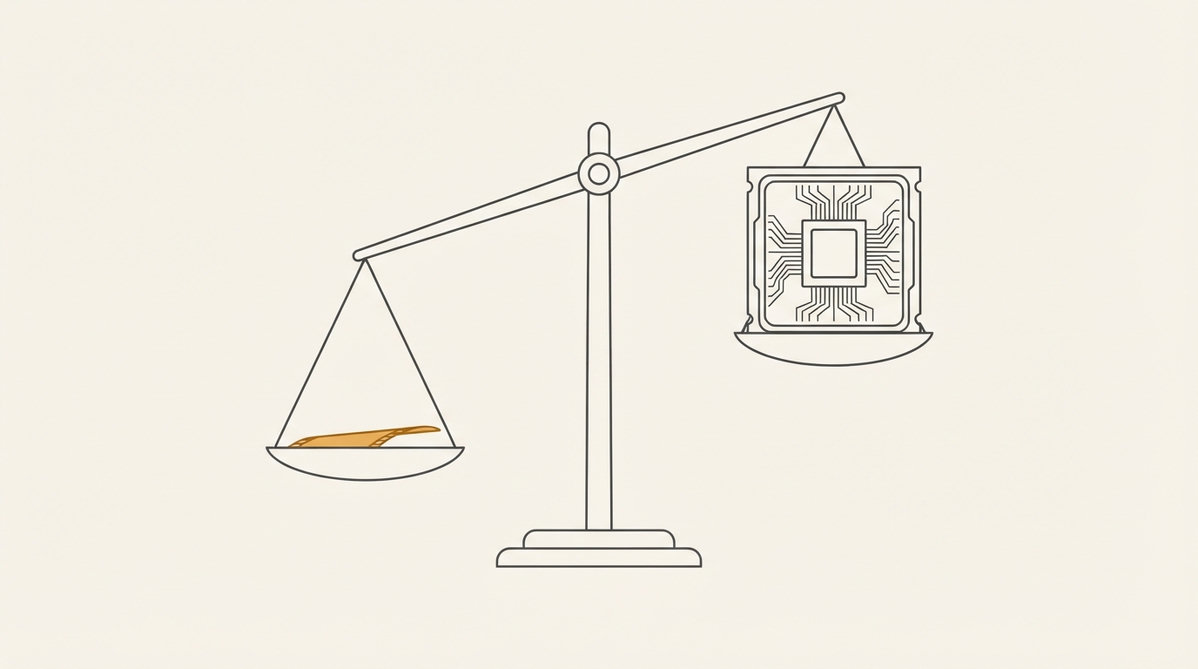
Value concentrates where replacement is slow. The film is cheap and nearly irreplaceable. The chip is expensive and — given enough years, money and yield — reproducible by at least a few companies. A factory worth tens of billions of dollars can sit idle because one material that costs a rounding error did not arrive.
Cheap and irreplaceable outweighs expensive and reproducible.
So when someone shows you a map of the AI industry with the famous logos on it, the useful question isn't which box is biggest. It's which box has no second supplier and a qualification cycle measured in years.
Quite often, that box is the small one.
ความคิดเห็น